'/%3e%3c/mask%3e%3cg%20mask='url(%23mask0_3045_12)'%3e%3crect%20width='22'%20height='22'%20fill='%23404D63'/%3e%3c/g%3e%3cdefs%3e%3cpattern%20id='pattern0_3045_12'%20patternContentUnits='objectBoundingBox'%20width='1'%20height='1'%3e%3cuse%20xlink:href='%23image0_3045_12'%20transform='scale(0.01)'/%3e%3c/pattern%3e%3cimage%20id='image0_3045_12'%20width='100'%20height='100'%20xlink:href='data:image/png;base64,iVBORw0KGgoAAAANSUhEUgAAAGQAAABkCAYAAABw4pVUAAAAAXNSR0IArs4c6QAAAARnQU1BAACxjwv8YQUAAAAJcEhZcwAADsMAAA7DAcdvqGQAAATmSURBVHhe7Z1p6GVjHMf/DGXGlmXIFlnSWAahZCkyXpB4IUZeKBlblkRSIu9QijfyQqFkKaXsKZkhspQU2RIvRJbInn37fMfc+nl6zj33uf9zz/k9d36f+tT8597z3Oe53865Z3t+Z2FGHILr8Bf8J/FzvBWXokc2wcvwQ/wLbd9/xzfxNKyGo/E3tAPJ+TIuQW/cibn+pl6MVfAu5gaQ81L0xFH4N+b6mvoTLkfX7I65zjf5KHriesz1s8nT0TUHo+3wW2g5Fu3rL6Inbkbbv0vQkm7OzkHXRCDOiEBmzGa4XYHHoO1wWyCvYK6dobwdbf/aArkAc+00uRVOxZH4AuaOI0psC8S7bYFM48d4Nk7MKvwTc42VGoE0ez5OxGuYa2AaI5Bmv8PWsxU6crZrhw6Svinwe7Qf2hbIH5hrZyjTTXRbIDo4zLXTpE692OWPwLFsi3YBpVhC7GWN50m0y+v7GEsE8v/+RSADM/eBvI97G89C+7r3QG5A2//70b7uPhCd/bTLt/kweuJazPWzyZOxhN4DEc+jbWOcWmM8sT9Oci1H6kLblljCIIHsh1+ibSenVn+PXIVt10S0e3wKljJIIGInvAPfwI+MH+BaPA91qdQrJ+Dj+B7a/r+ND+ABOA2DBRLkiUCcEYE4IwJxRgTijEUH8iMeHnamzkzY77c4kHC2RiDOjECcWRyIrug9G3bmV2i/3+JAYi+rW2K31xkRiDMiEGdEIM6IQJwRgTgjAnFGBOKMCMQZEcgE9Dk1OwKZgBvxMdxt/V+zJQJp4UAc3RinsV6Is7w9KQIZgzZVqiZhx6vpZlPPA5yACGQMV6Adqyy9V7eUCKSBvVD3C9ix9nFrawTSwDNox6kLRzvirIlAMpyLdoyyrwIAEUiCbgL/Gu0Yn8K+iEASHkI7vh9wD+yLCMRwKtqxyb7rdUUgG9gGP0E7tpdwU+yTCGQD6ezZX3EF9k0EAsdhOkVNleOGYKMPZAvU1Gw7Js2d3xyHYKMP5Ca041EdF5WeGorqAunyaPlQTIu93IZDUlUgqgLxLV65/q/FoTO5r6Mdi2bRls4r75pqAtkH7W7pLbiY6xLXoB2HftRPwqGpIhAdC6h8t/1ceR9O8+OrcH9G29Y96IFq1hAVz1SBL/vZ8mks2cxorXoObRsqgbE9eqCq35CDMD2alq/iDjgJazBd/kz0QlWBCJ3oewdtH6RKXOyJ49gV07XMWynz6gIR2ryk17rlp6i1qIlH0L5ffVdInqgyELEMn0DbF6k1IDeIMzB9r+4g8Ua1gQhV1b4XbX+k9qDsUwlUMfoztO/Rw2Q8VhuqOhChLzUtuyd1CmS0BtyN9jXVslLNLo9UH8iIyzF9/JDUnSLpmVyV6fPK3AQiVmNb+T0VTNOmzitzFYg4EXUd3PZxpObUH4aembtAhIq4fIG2n1Lnv7wzl4GIfVGPtRv1U7UcdTHKO3MbiNgZdYpdP+rH6z8qYK4DEVvjRf/9swrmPpDaiECcEYE4IwJxRgTijAjEGRGIMyIQZ0QgzohAnBGBOCMCcUYE4owIxBkRiDMiEGdEIM4oDkS3cNoF4ukI3Zo+HUHTMFrJTQkIu1c3/u2CrVyNuQbCbn0QJ0L3016HmoCZayhcnLr78i4snoC6FFfiqrAzNUdeO05BEARB0DELC/8C1D9SupOCPVIAAAAASUVORK5CYII='/%3e%3c/defs%3e%3c/svg%3e)
Corporate Office Plans: 5 Fresh Design Ideas for Modern Workspaces
Corporate office plans have come a long way from rows of desks, bad lighting, and that one sad conference room nobody actually wants to sit in. Today, the best workplaces are designed to do a bit more heavy lifting. They need to help people focus, collaborate, meet clients, and survive hybrid work without feeling like a chaotic coworking space that ran out of coffee at 11 a.m.
That is where smart design starts to matter. A strong office plan is not just about fitting furniture into a floorplate. It is about shaping how people move through the day, how noise travels, where natural light lands, and whether the whole place feels polished or patched together. The best spaces strike a careful balance. They feel open, but not noisy. Stylish, but not precious. Flexible, but not vague. Glass partitions have become one of the most useful tools in pulling that off, because they let designers divide space without killing light or making the office feel boxed in.
This is where modern corporate office planning is headed: toward spaces that look sharper, work harder, and feel far more human.
Understanding Corporate Office Plans and Their Impact
A corporate office plan quietly controls almost everything. It decides whether people can think clearly, whether meetings happen smoothly, and whether the office feels energizing or exhausting by two in the afternoon. Good planning shapes sightlines, circulation, acoustics, and access to daylight, all without making a big theatrical fuss about it.
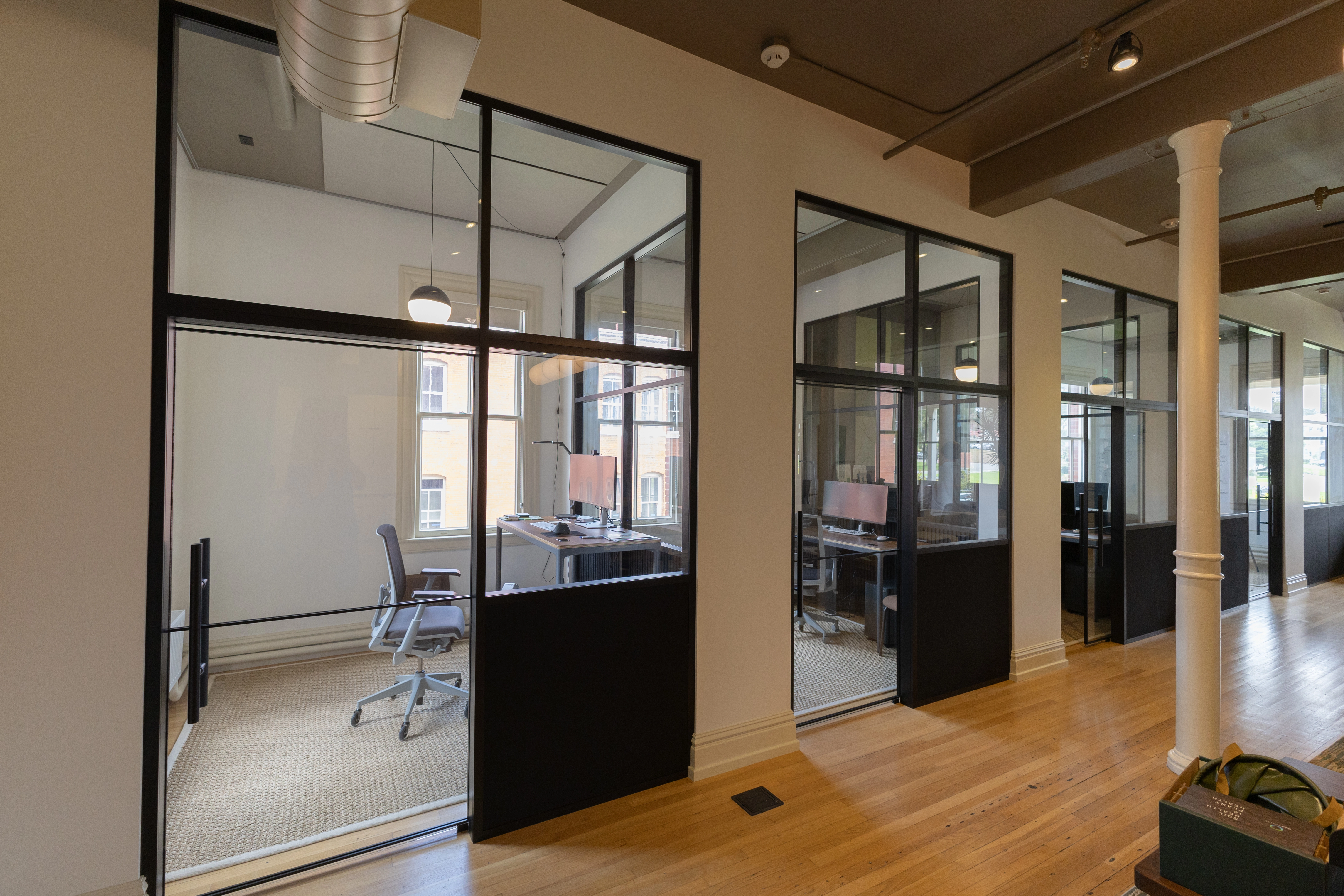
When office design is done well, people barely notice it. They just move through the day with less friction. Teams find the right places to work, private conversations stay private, and shared areas feel intentional instead of improvised. In that sense, the layout is doing far more than organizing square footage. It is organizing behavior. And in a modern workplace, that may be the difference between an office people tolerate and one they actually want to show up to.
1. Controlled Open Plan Layouts
The open plan is still alive, despite years of people threatening to put it out of its misery. The problem was never openness itself. The problem was turning “open” into “anything goes.” A good open office needs boundaries, just not the heavy, claustrophobic kind.
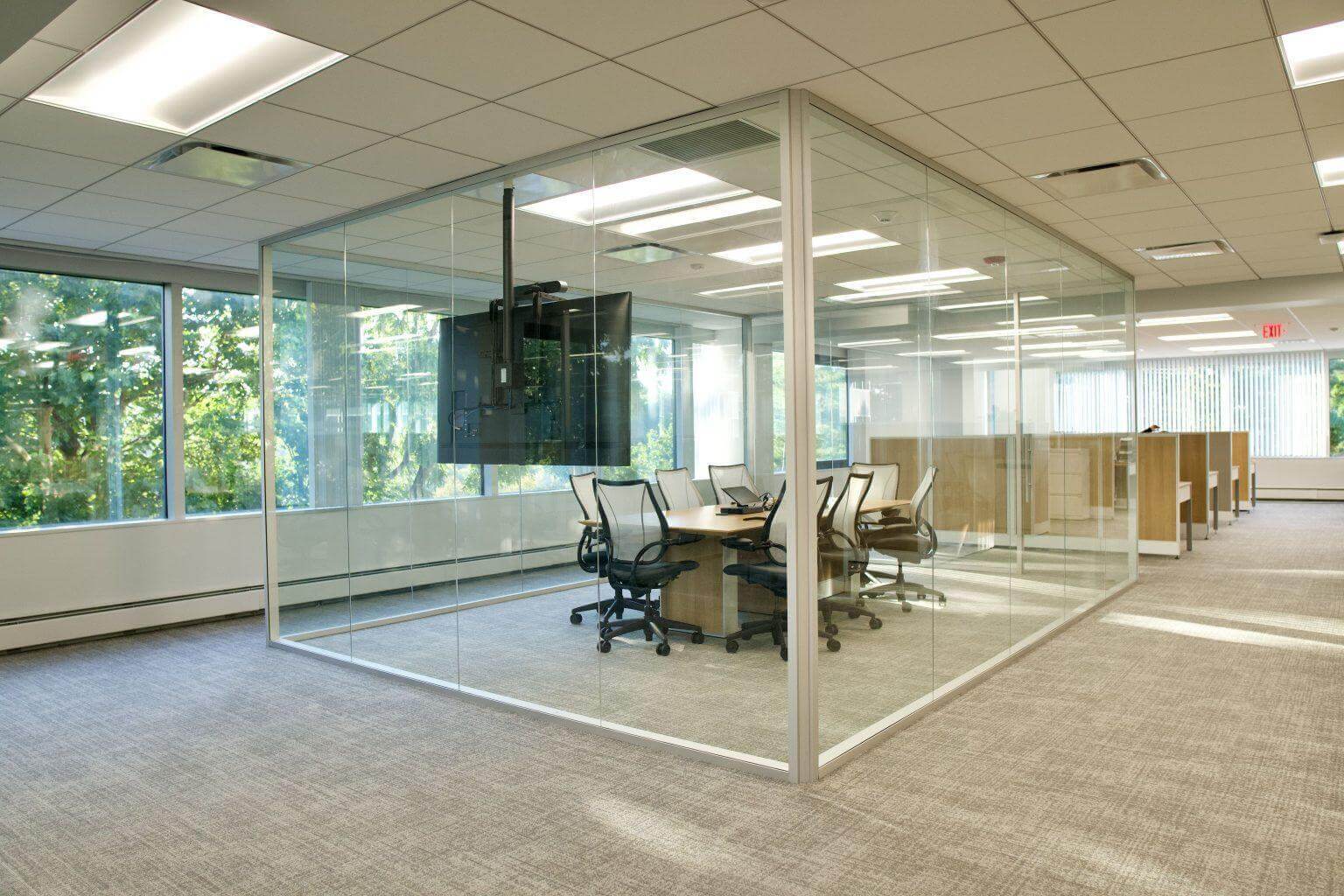
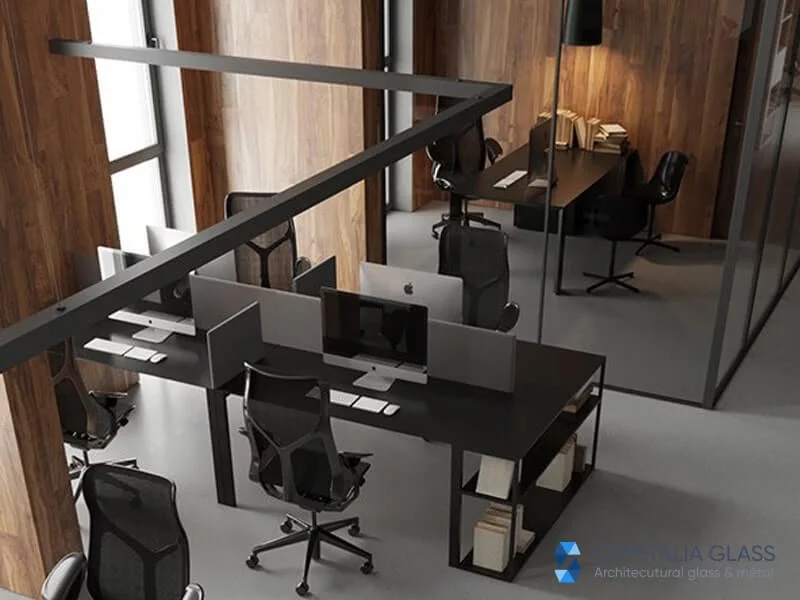
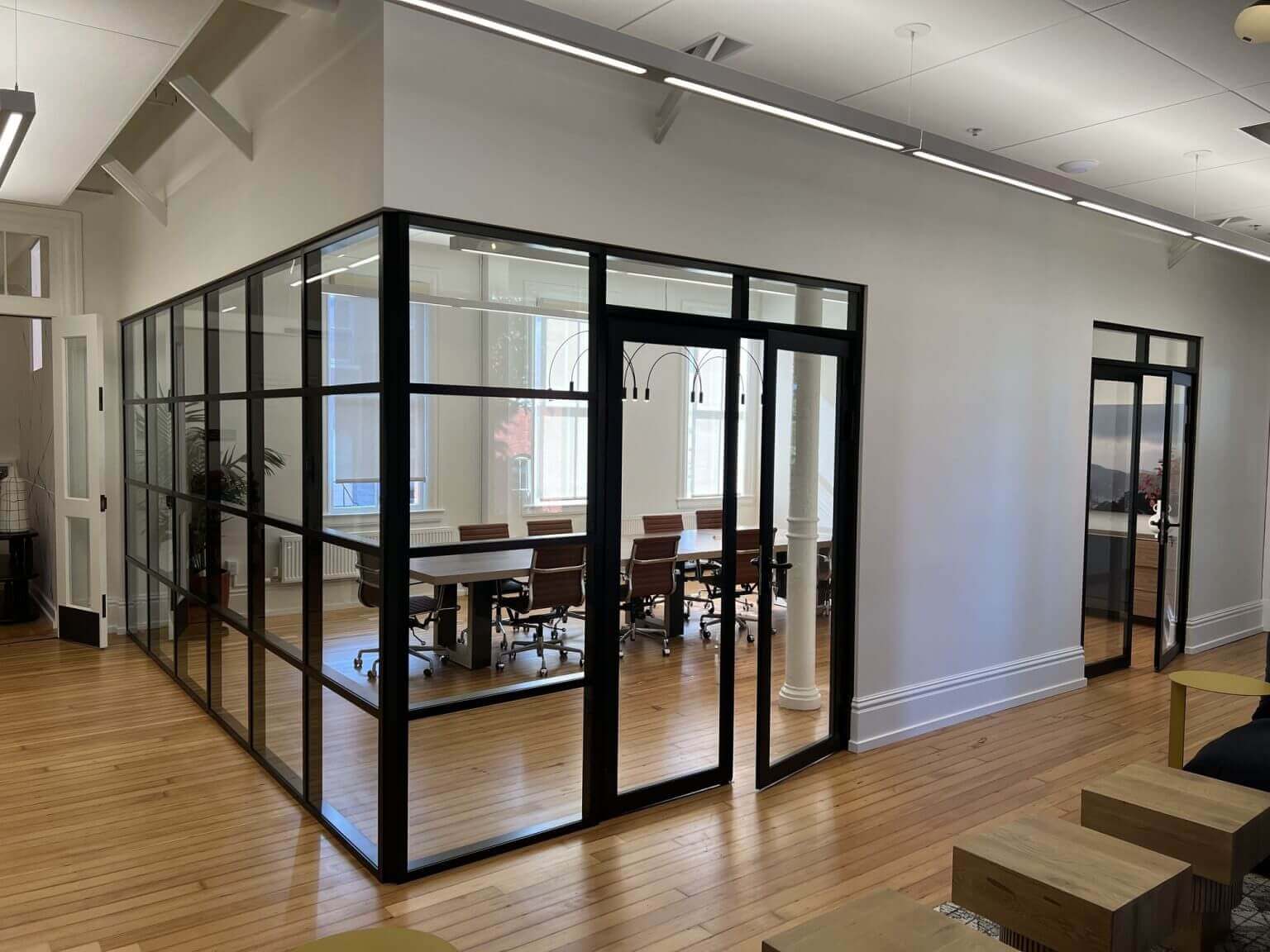
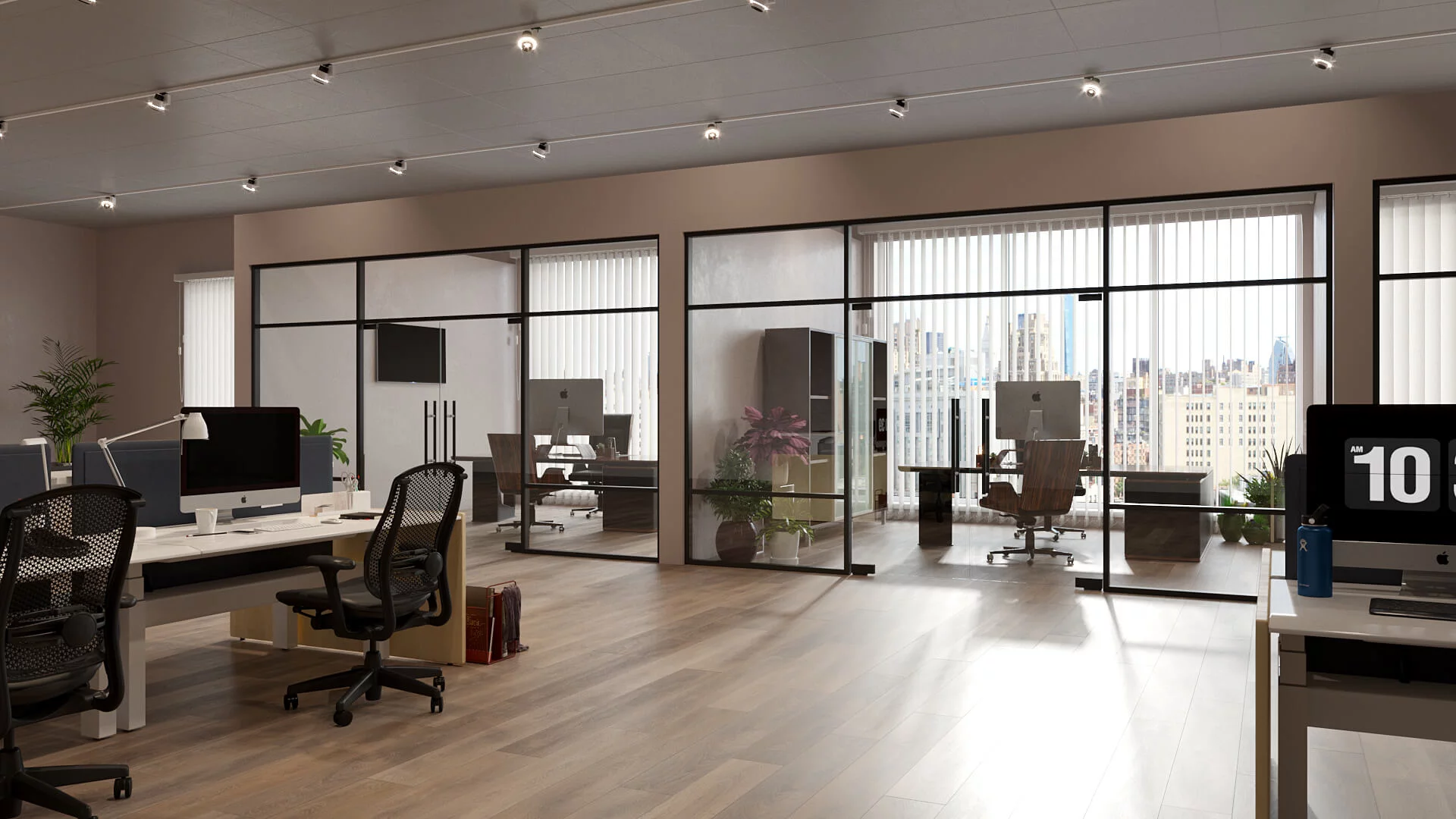
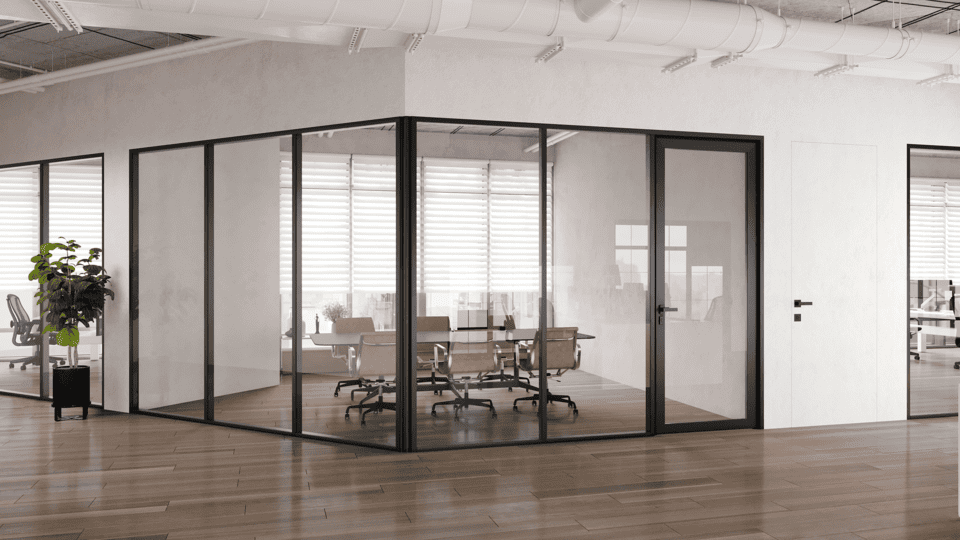
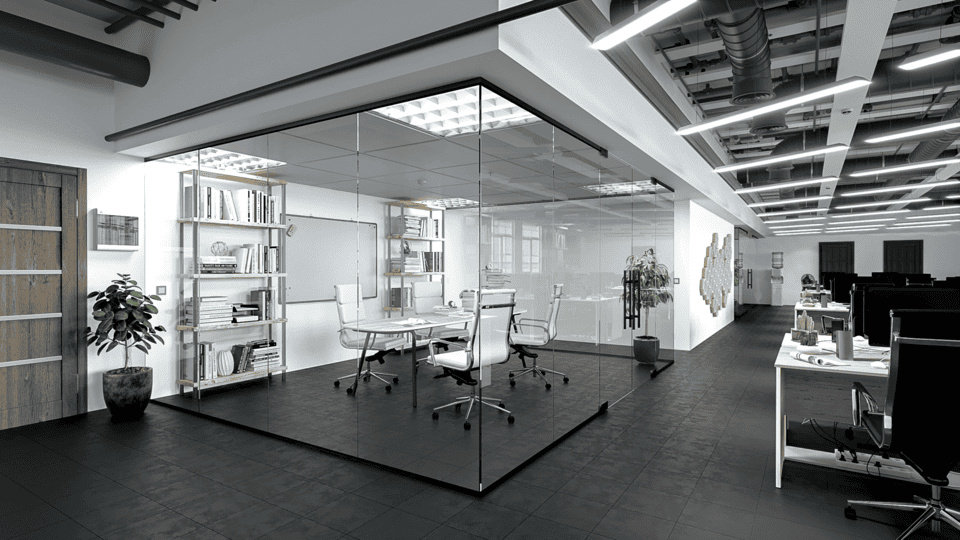
That is where glazed partitions earn their keep. They can define departments, create meeting corners, and guide movement through the space while still preserving visibility across the office. You get structure without that old-school cubicle gloom. It is the difference between a room that feels airy and one that feels like everyone is living in each other’s pockets.
With the right profiles and acoustic detailing, a controlled open layout can stay visually connected while cutting down on the kind of background noise that slowly drives everyone mad. In other words, it is open plan with manners.
2. Biophilic Design with Generous Daylight
Biophilic design may sound like one of those trendy phrases people drop in meetings to sound expensive, but the idea behind it is very simple: people feel better when spaces connect them to natural elements. Light, greenery, texture, calm materials, a view outside if you are lucky. None of this is revolutionary, but it works.
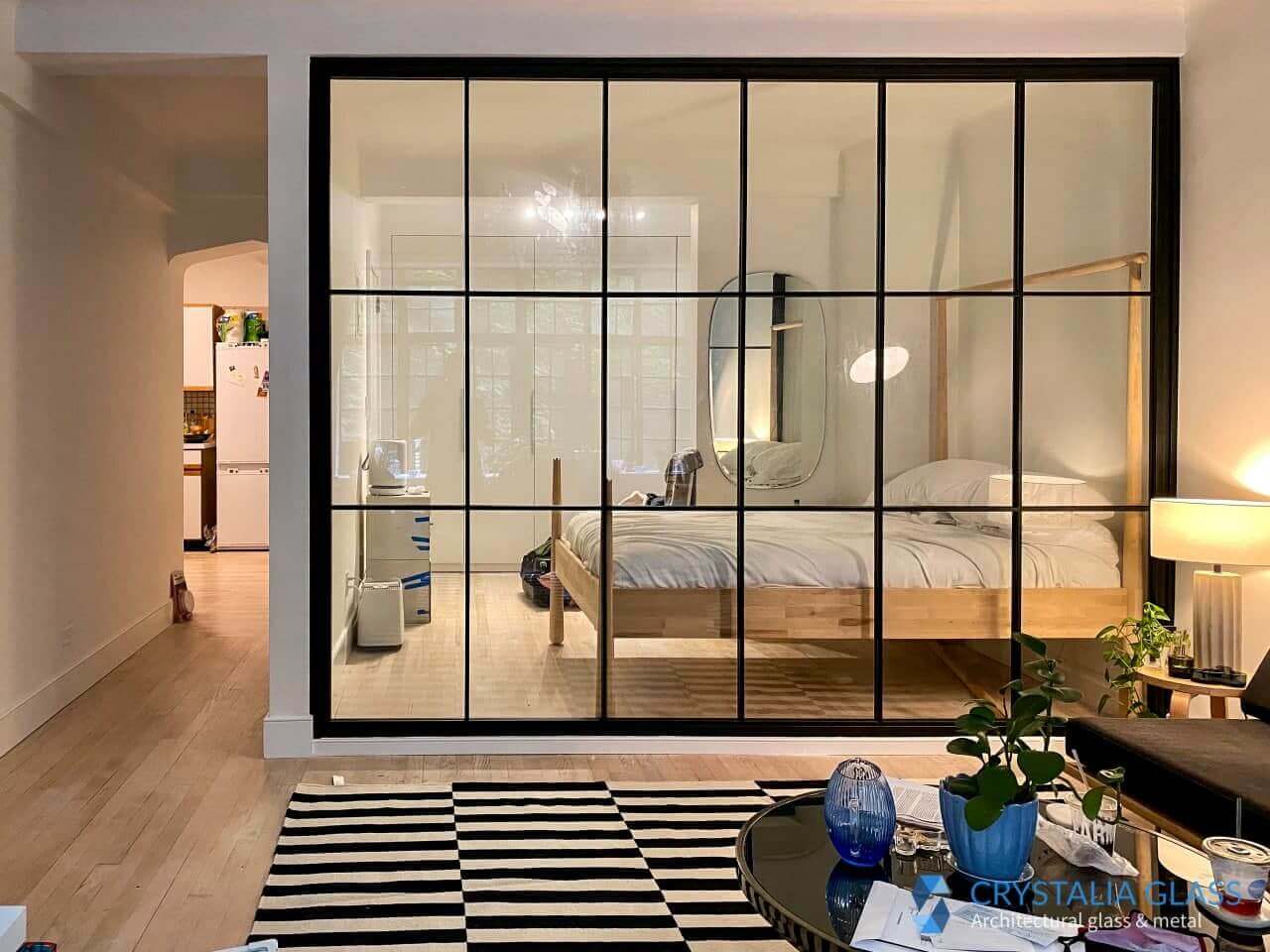
In office planning, daylight is the big one. When natural light can reach farther into the interior, the whole space feels larger, cleaner, and less draining. Glass partitions help carry that light across departments and into enclosed zones that would otherwise feel flat and sealed off. Frosted or textured glass can add privacy without shutting the blinds on the whole room.
The result is a workplace that feels less artificial and far less oppressive. And frankly, that matters. No one has ever done their best thinking under flickering ceiling panels while staring at a beige divider wall.
3. Activity-Based Work Zones
Hybrid work changed the rules. People are no longer coming into the office just to sit at the same desk and answer the same emails they could have handled from home in sweatpants. Offices now have to offer variety. That means spaces for focused work, quick discussions, private calls, relaxed brainstorming, and the occasional moment of escape.
Activity-based planning responds to that shift by creating different zones for different tasks. The smartest versions of this approach feel intuitive. You should be able to walk into a space and immediately understand where to go for quiet concentration and where to gather for a fast team huddle.
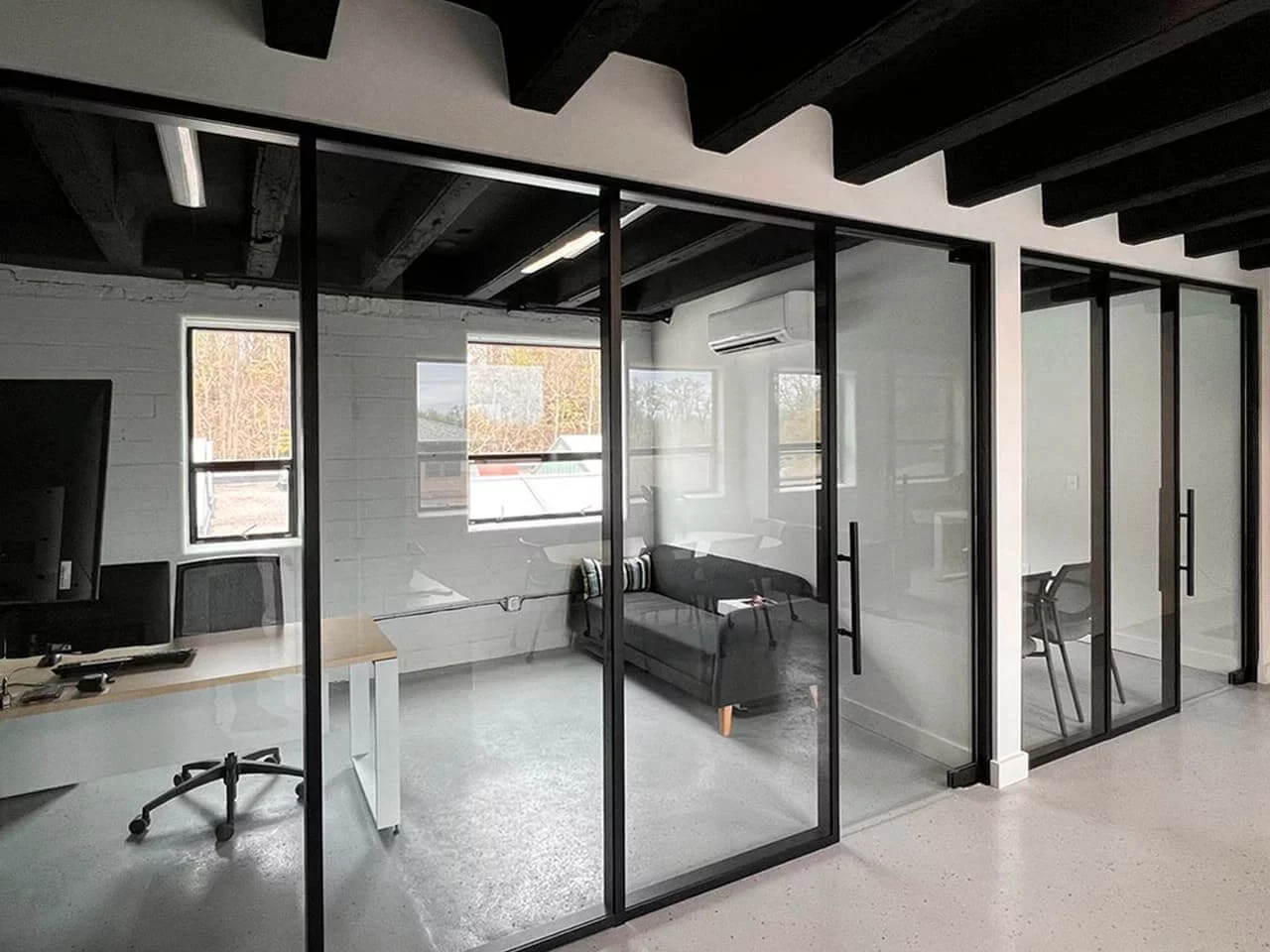
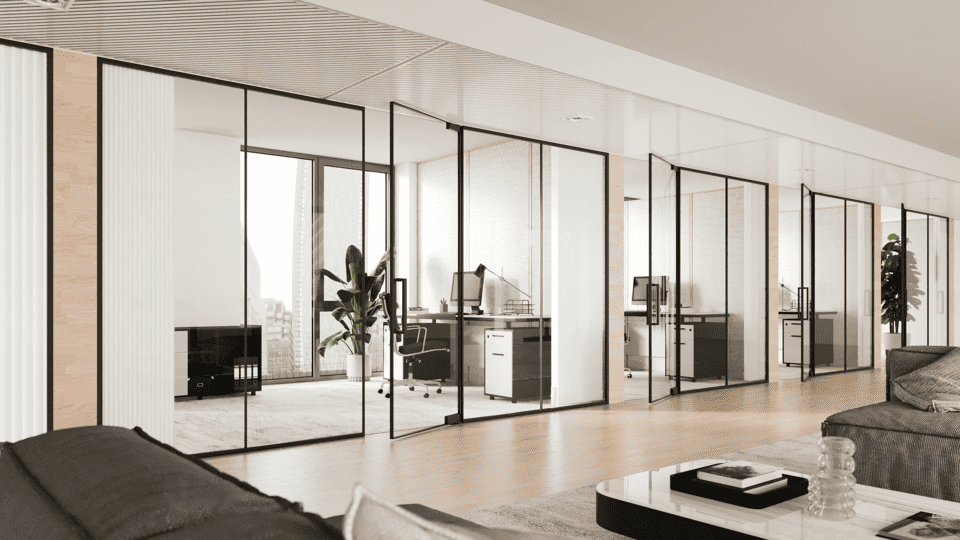
Glass works particularly well here because it keeps those zones visually light. Frameless systems can make focus rooms feel calm instead of cramped, while framed partitions can give meeting areas a bit more definition. Add acoustic glass where needed, and suddenly the office starts behaving like a well-edited wardrobe: every piece has a job, and nothing is there just for show.
4. Executive Minimalism with Steel-Framed Glass
Executive offices used to lean heavily on dark wood, oversized desks, and enough visual weight to suggest a minor monarchy. That approach is fading fast. Leadership spaces today are becoming cleaner, lighter, and more transparent, both literally and symbolically.
Steel-framed glass has become a favorite for this reason. It brings structure and authority, but it does not wall leadership off from the rest of the office like some corner fortress. These offices can still provide privacy when needed, yet remain visually connected to the wider team.
There is also something very modern about the message it sends. It says confidence, not ego. Presence, not distance. It looks considered, sharp, and quietly powerful. Which, in design terms, is usually the sweet spot.
5. Flexible Meeting Rooms That Morph on Demand
Few things waste office space faster than a giant boardroom used twice a week and ignored the rest of the time. Modern workplaces need rooms that can change shape as quickly as the calendar does.
Sliding or movable glass walls make that possible. A meeting room can expand for a presentation, tighten for a strategy session, or open up completely for a workshop or social event. That kind of flexibility is not just convenient. It makes the office far more efficient, especially when every square foot has a price tag attached to it.
And unlike temporary dividers that always look temporary, glass keeps the space polished even when it is constantly adapting. It is practical, yes, but it also looks deliberate, which is half the battle in good design.
Why Glass Matters in Corporate Office Plans
Glass is not just a style move, and it is definitely not some passing obsession designers will laugh about in five years. In strong office planning, it solves real problems. It pushes daylight deeper into the plan, helps maintain visual continuity, and supports a sense of openness even when the office is carefully divided into different functions.
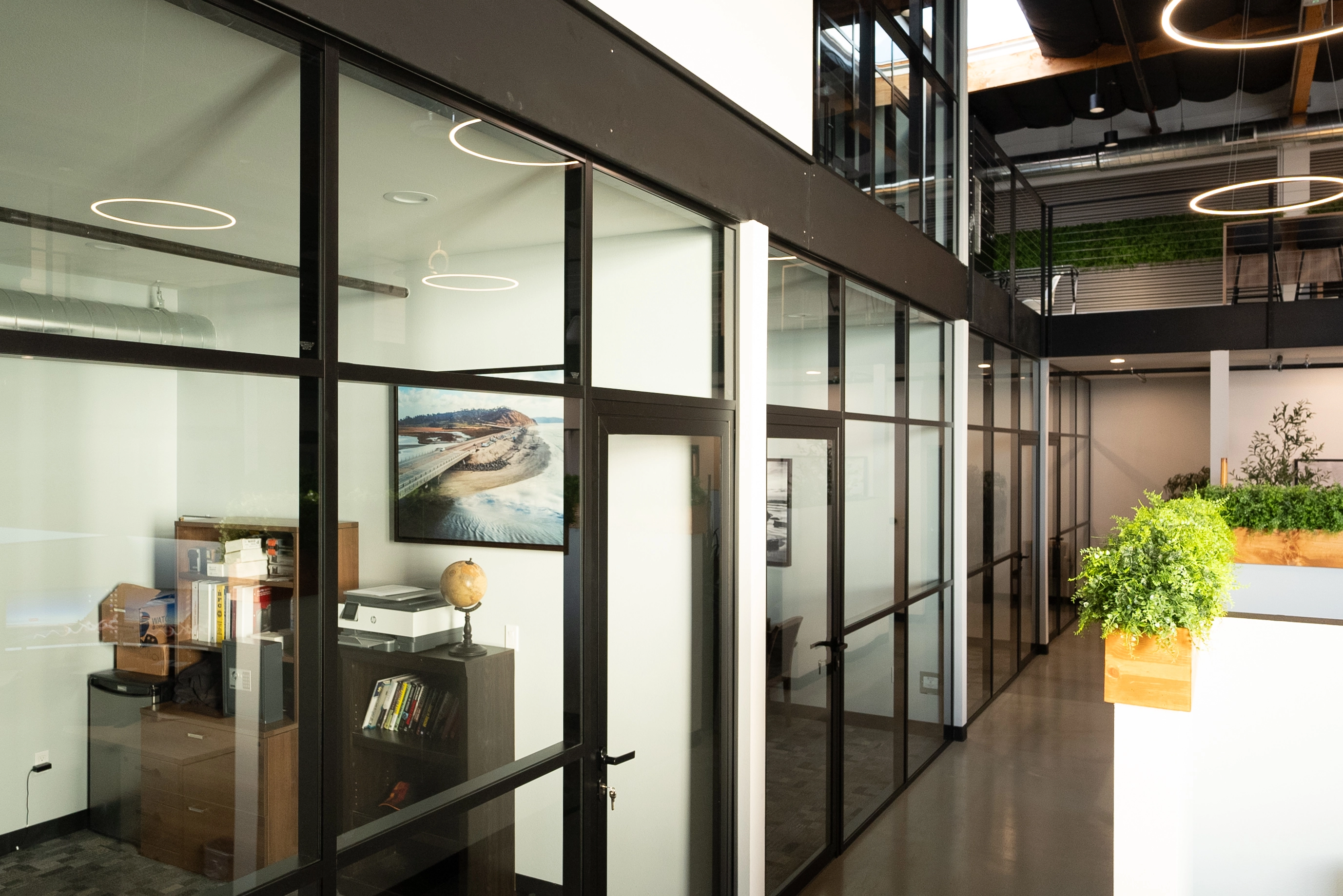
With the right acoustic specification, glass can also improve speech privacy and reduce distractions, which is one of those things everyone wants and nobody notices until it is missing. It also gives offices room to evolve. Teams grow, structures change, and layouts need to adjust. Glass systems make that process cleaner and less disruptive than full rebuilds every time the org chart shifts.
In short, glass brings clarity. Literally, yes, but also spatially. It makes the office easier to read.
Real-World Considerations That Save Projects
Of course, even the prettiest office plan can fall apart if the practical details are ignored. Good design needs to survive contact with construction, budgeting, and everyday use. Tracks and transoms need proper reinforcement. Power for smart shades or integrated tech should be planned before finishes go in. Door thresholds should stay flush, unless the goal is apparently to test everyone’s reflexes on the way to the meeting room.
The small alignments matter too. Mullion grids should work with furniture layouts, not fight them. Circulation should feel calm and obvious. Cleaning and maintenance should not become daily annoyances. These are not glamorous details, but they are the difference between a space that merely looks finished and one that actually works.
That, really, is the whole point of modern corporate office planning. Not just to create something attractive, but to create something attractive that behaves well under pressure.