'/%3e%3c/mask%3e%3cg%20mask='url(%23mask0_3045_12)'%3e%3crect%20width='22'%20height='22'%20fill='%23404D63'/%3e%3c/g%3e%3cdefs%3e%3cpattern%20id='pattern0_3045_12'%20patternContentUnits='objectBoundingBox'%20width='1'%20height='1'%3e%3cuse%20xlink:href='%23image0_3045_12'%20transform='scale(0.01)'/%3e%3c/pattern%3e%3cimage%20id='image0_3045_12'%20width='100'%20height='100'%20xlink:href='data:image/png;base64,iVBORw0KGgoAAAANSUhEUgAAAGQAAABkCAYAAABw4pVUAAAAAXNSR0IArs4c6QAAAARnQU1BAACxjwv8YQUAAAAJcEhZcwAADsMAAA7DAcdvqGQAAATmSURBVHhe7Z1p6GVjHMf/DGXGlmXIFlnSWAahZCkyXpB4IUZeKBlblkRSIu9QijfyQqFkKaXsKZkhspQU2RIvRJbInn37fMfc+nl6zj33uf9zz/k9d36f+tT8597z3Oe53865Z3t+Z2FGHILr8Bf8J/FzvBWXokc2wcvwQ/wLbd9/xzfxNKyGo/E3tAPJ+TIuQW/cibn+pl6MVfAu5gaQ81L0xFH4N+b6mvoTLkfX7I65zjf5KHriesz1s8nT0TUHo+3wW2g5Fu3rL6Inbkbbv0vQkm7OzkHXRCDOiEBmzGa4XYHHoO1wWyCvYK6dobwdbf/aArkAc+00uRVOxZH4AuaOI0psC8S7bYFM48d4Nk7MKvwTc42VGoE0ez5OxGuYa2AaI5Bmv8PWsxU6crZrhw6Svinwe7Qf2hbIH5hrZyjTTXRbIDo4zLXTpE692OWPwLFsi3YBpVhC7GWN50m0y+v7GEsE8v/+RSADM/eBvI97G89C+7r3QG5A2//70b7uPhCd/bTLt/kweuJazPWzyZOxhN4DEc+jbWOcWmM8sT9Oci1H6kLblljCIIHsh1+ibSenVn+PXIVt10S0e3wKljJIIGInvAPfwI+MH+BaPA91qdQrJ+Dj+B7a/r+ND+ABOA2DBRLkiUCcEYE4IwJxRgTijEUH8iMeHnamzkzY77c4kHC2RiDOjECcWRyIrug9G3bmV2i/3+JAYi+rW2K31xkRiDMiEGdEIM6IQJwRgTgjAnFGBOKMCMQZEcgE9Dk1OwKZgBvxMdxt/V+zJQJp4UAc3RinsV6Is7w9KQIZgzZVqiZhx6vpZlPPA5yACGQMV6Adqyy9V7eUCKSBvVD3C9ix9nFrawTSwDNox6kLRzvirIlAMpyLdoyyrwIAEUiCbgL/Gu0Yn8K+iEASHkI7vh9wD+yLCMRwKtqxyb7rdUUgG9gGP0E7tpdwU+yTCGQD6ezZX3EF9k0EAsdhOkVNleOGYKMPZAvU1Gw7Js2d3xyHYKMP5Ca041EdF5WeGorqAunyaPlQTIu93IZDUlUgqgLxLV65/q/FoTO5r6Mdi2bRls4r75pqAtkH7W7pLbiY6xLXoB2HftRPwqGpIhAdC6h8t/1ceR9O8+OrcH9G29Y96IFq1hAVz1SBL/vZ8mks2cxorXoObRsqgbE9eqCq35CDMD2alq/iDjgJazBd/kz0QlWBCJ3oewdtH6RKXOyJ49gV07XMWynz6gIR2ryk17rlp6i1qIlH0L5ffVdInqgyELEMn0DbF6k1IDeIMzB9r+4g8Ua1gQhV1b4XbX+k9qDsUwlUMfoztO/Rw2Q8VhuqOhChLzUtuyd1CmS0BtyN9jXVslLNLo9UH8iIyzF9/JDUnSLpmVyV6fPK3AQiVmNb+T0VTNOmzitzFYg4EXUd3PZxpObUH4aembtAhIq4fIG2n1Lnv7wzl4GIfVGPtRv1U7UcdTHKO3MbiNgZdYpdP+rH6z8qYK4DEVvjRf/9swrmPpDaiECcEYE4IwJxRgTijAjEGRGIMyIQZ0QgzohAnBGBOCMCcUYE4owIxBkRiDMiEGdEIM4oDkS3cNoF4ukI3Zo+HUHTMFrJTQkIu1c3/u2CrVyNuQbCbn0QJ0L3016HmoCZayhcnLr78i4snoC6FFfiqrAzNUdeO05BEARB0DELC/8C1D9SupOCPVIAAAAASUVORK5CYII='/%3e%3c/defs%3e%3c/svg%3e)
Why Glass Conference Room Walls Make Sense
A well-designed conference room should do two jobs at once. It should look impressive, and it should work in real life. That may sound simple, but this is where many office upgrades go sideways. Some spaces feel practical but dull. Others look great in photos and then immediately fall apart when you realize the whole office can hear what is being said inside.
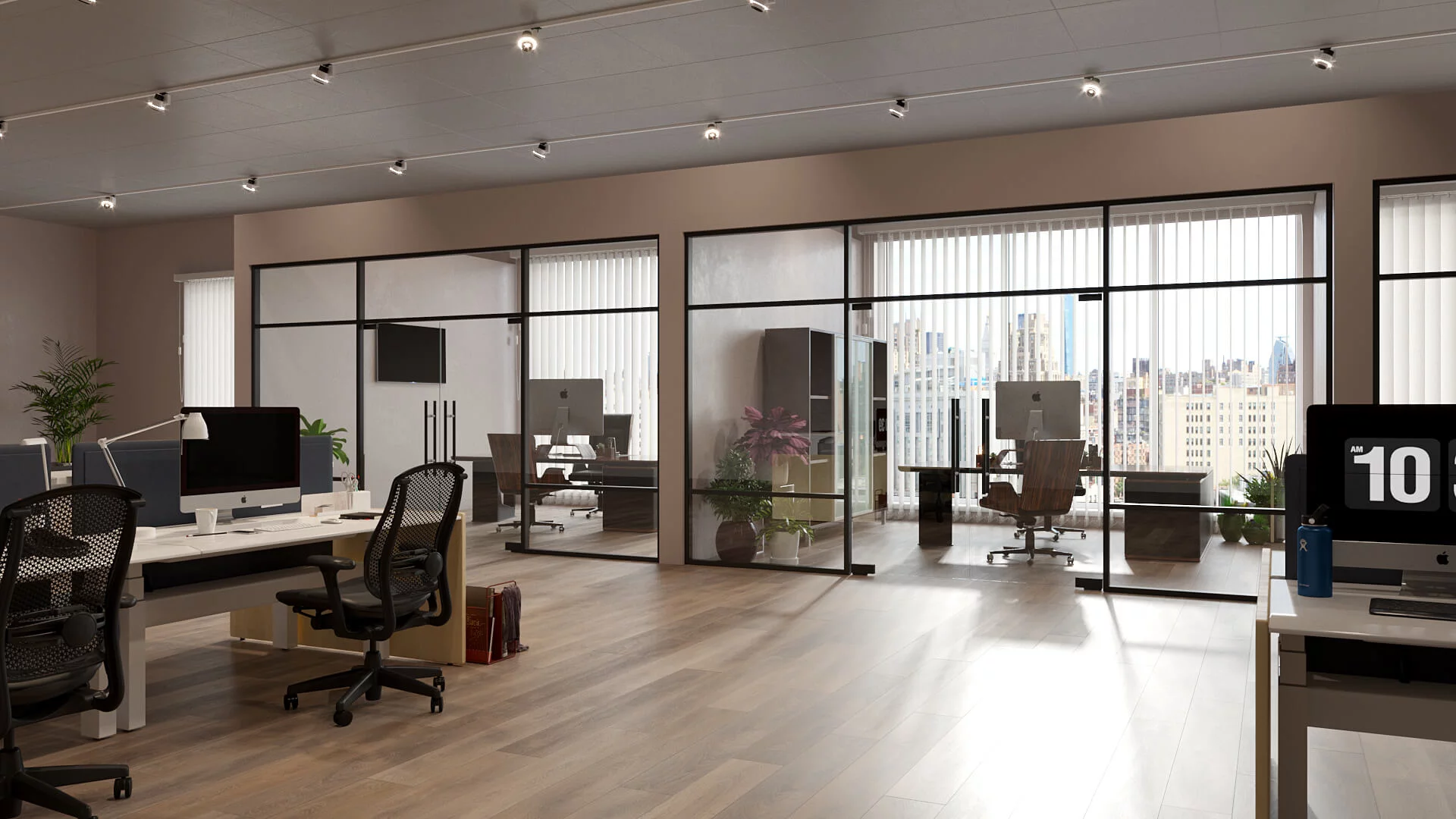
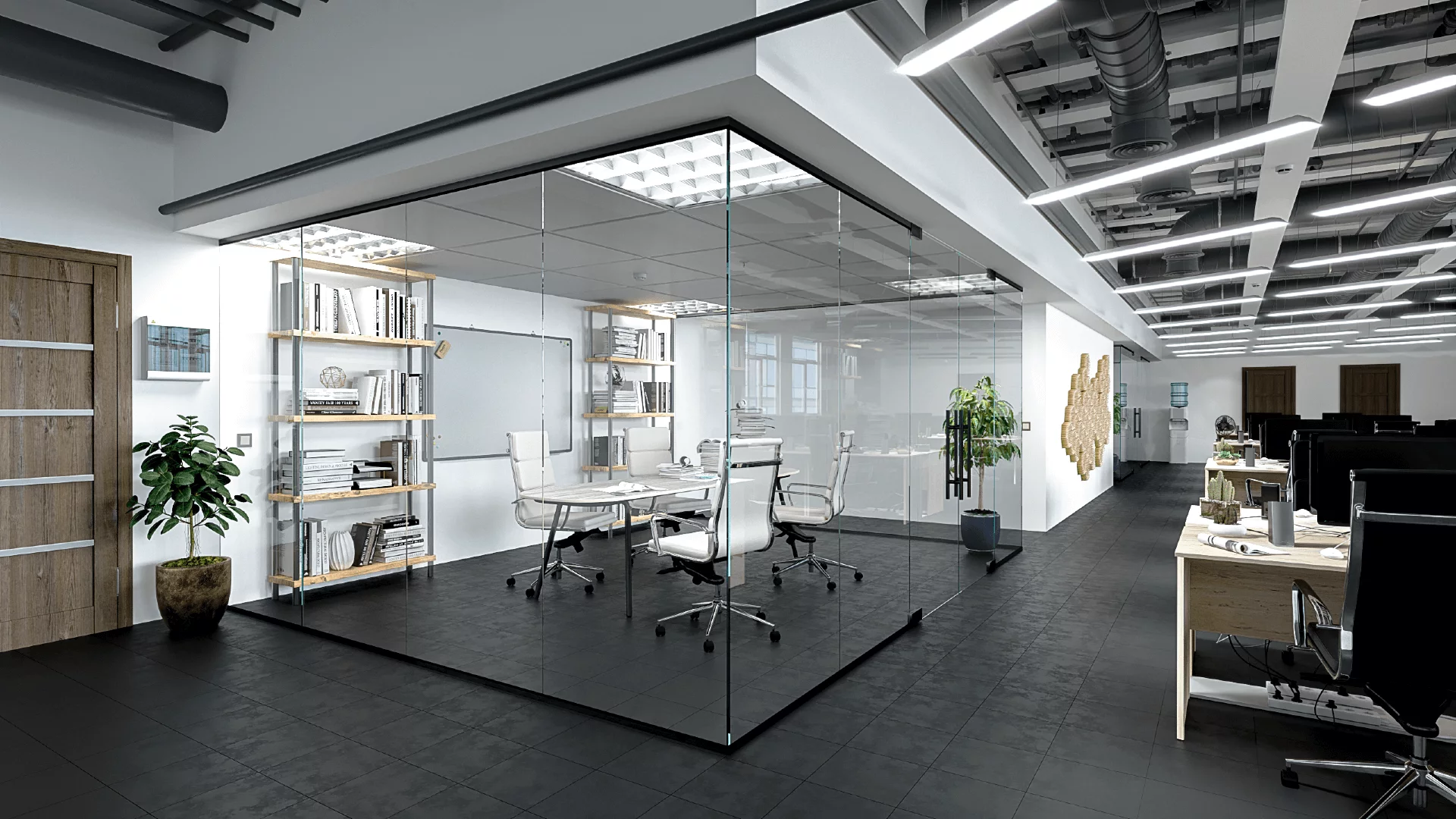
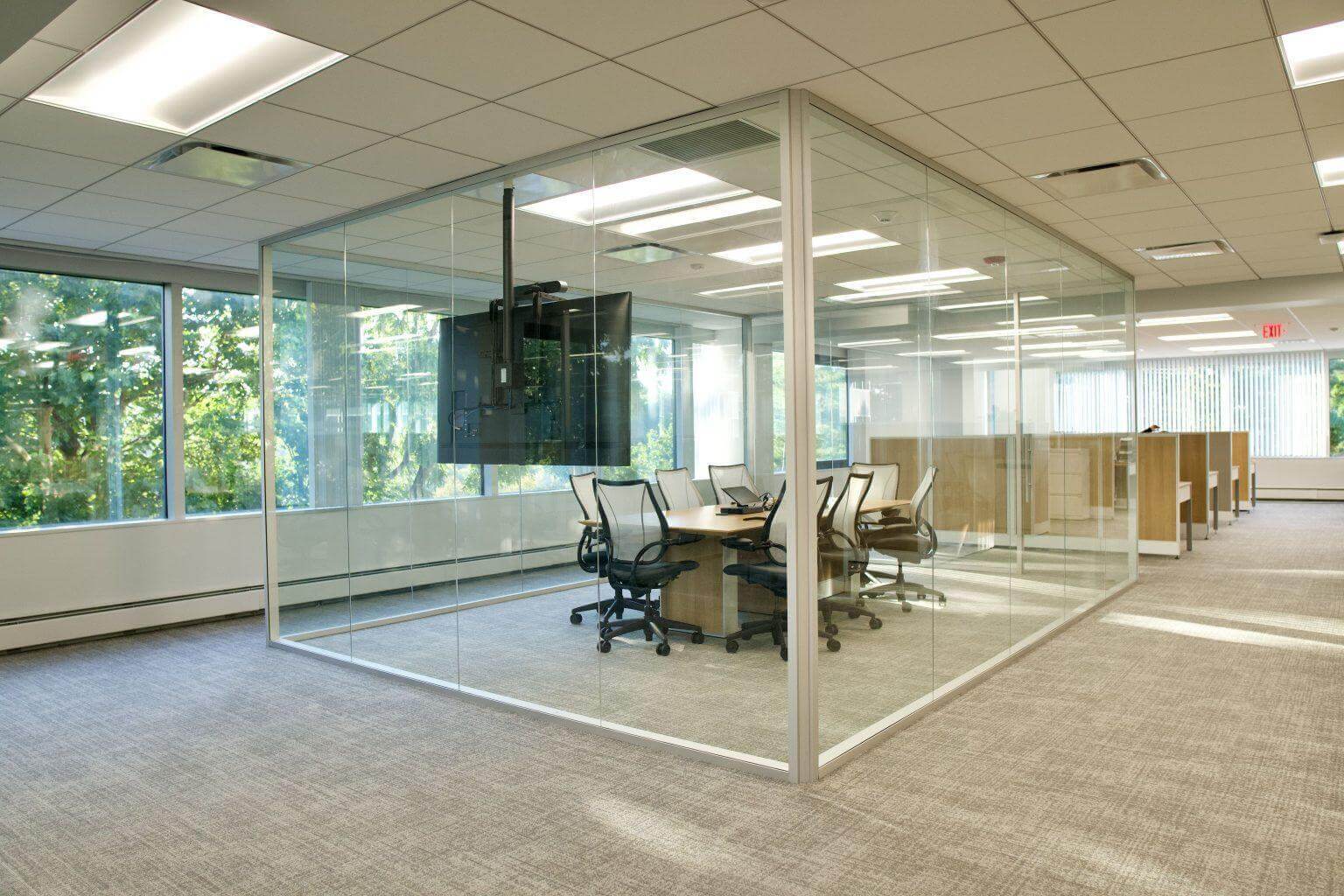
That is exactly why glass conference room walls have become such a popular choice in modern office design. They make workplaces feel brighter, cleaner, and more open. They help natural light travel deeper into the office, reduce that boxed-in feeling, and give the entire space a more polished, architectural look. But before choosing a system, it is worth taking a step back. Not all glass conference room walls are built for the same priorities, and conference rooms tend to reveal every weak choice sooner or later.
Start With the Room’s Real Purpose
Before thinking about frame finish, mullion layout, or door style, the first question should be very practical: what will this room actually be used for?
If the space is mainly for casual collaboration, team check-ins, and everyday meetings, openness and aesthetics may be the top priorities. But if the room is used for executive discussions, hiring interviews, client calls, contract reviews, or strategic planning, privacy and acoustics become much more important.
That is where system selection starts to matter. A true conference room needs more than just good looks. It needs the right balance of transparency, sound control, and layout flexibility. In many commercial offices, the best-performing solution is the one that supports both the design vision and the day-to-day reality of how the room is used.
Why Acoustics Matter More Than Most People Expect
When people shop for conference room glass walls, they usually focus on appearance first. That is understandable. Glass is visual by nature. But in a conference room, acoustic performance should be one of the first things considered, not one of the last.
Not all glass partition systems perform the same way. Sound control depends on the full construction of the system, including framing, glazing type, seals, installation, and surrounding structural conditions. That is why it is important to choose a system designed for commercial interiors rather than treating every glass wall as if it were interchangeable.
Not all glass partition systems perform the same way. Sound control depends on the full construction of the system, including framing, glazing type, seals, installation, and surrounding structural conditions. That is why it is important to choose a system designed for commercial interiors rather than treating every glass wall as if it were interchangeable.
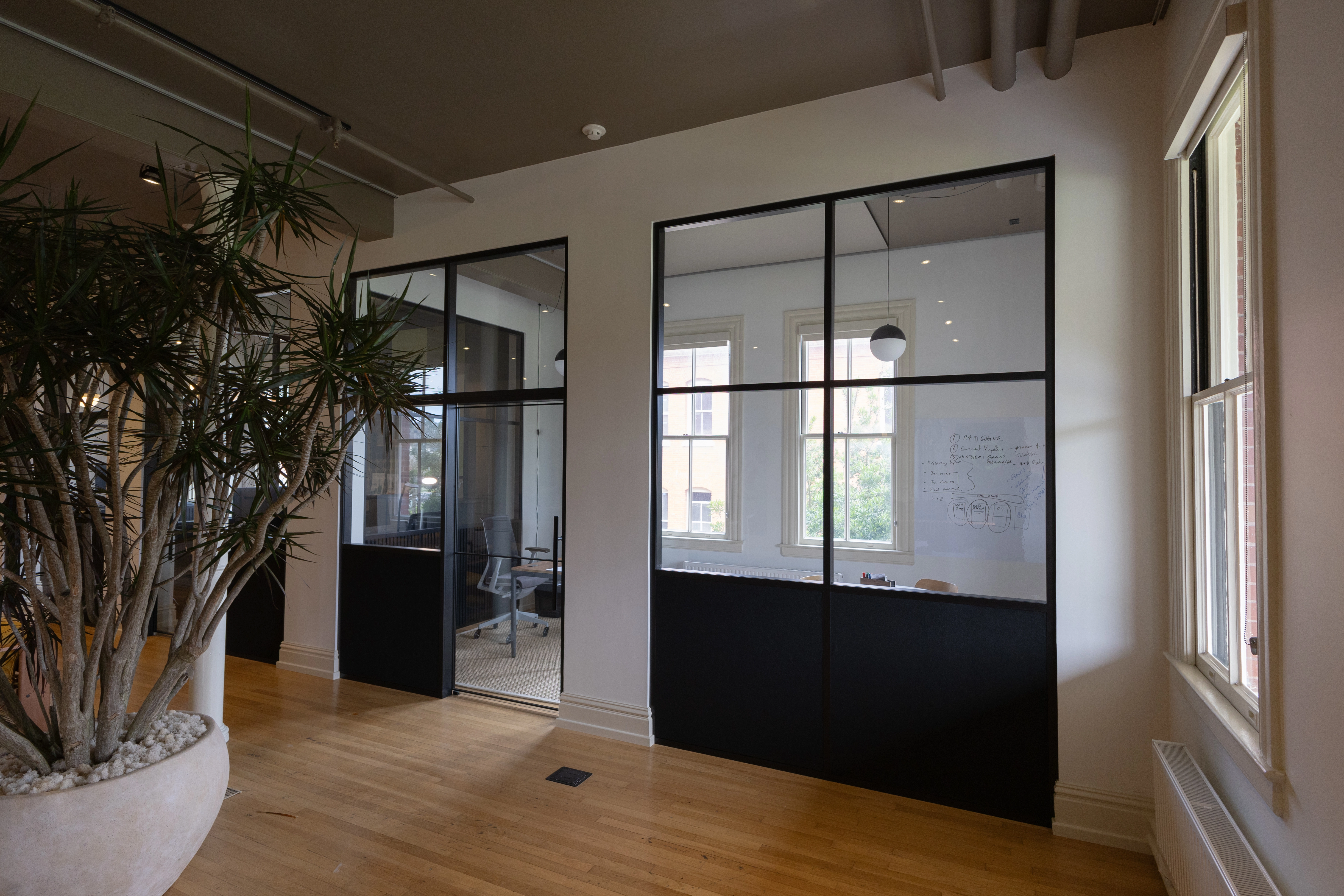
For offices where stronger sound insulation matters, KOMPAS is often the smarter choice. It was developed as a high-performance system for commercial spaces and works especially well in conference rooms. It also offers more flexibility in configuration, which makes it easier to match performance needs with the design of the office. If sensitive conversations happen inside the room, this is not the area where you want to guess and hope for the best.
Design Still Matters, and It Should
Of course, conference room glass walls are not only about function. They also shape the visual identity of the office. They can make a space feel sleek and contemporary, bold and industrial, or somewhere in between.
If the goal is a clean, modern office look, aluminum systems tend to be the most natural fit. They feel lighter, more minimal, and more architectural. They also work especially well in offices that want transparency and sophistication without making the room feel too heavy.
Our KOMPAS system fits that direction particularly well. It offers a refined commercial look and gives more freedom in planning the final composition of the room. This makes it a strong option for offices that want conference room glass walls to feel elegant, modern, and highly functional at the same time.
When Custom Steel Is the Better Choice
Not every office wants a soft minimalist aesthetic. Some spaces need more visual character. Some brands want a stronger architectural statement. And some conference rooms are meant to stand out, not quietly blend into the background.
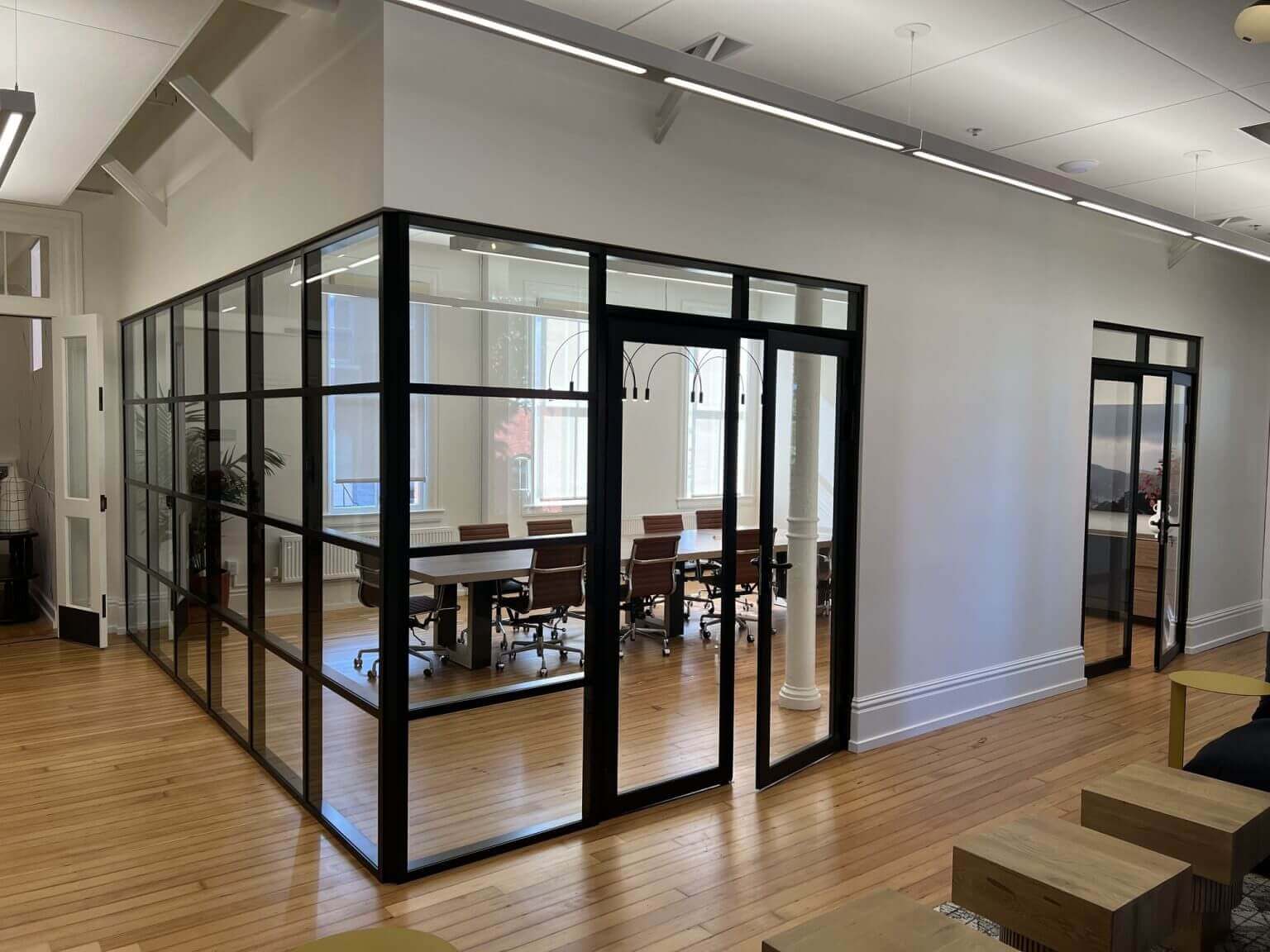
That is where Custom Steel Glass Partitions can be the better move.
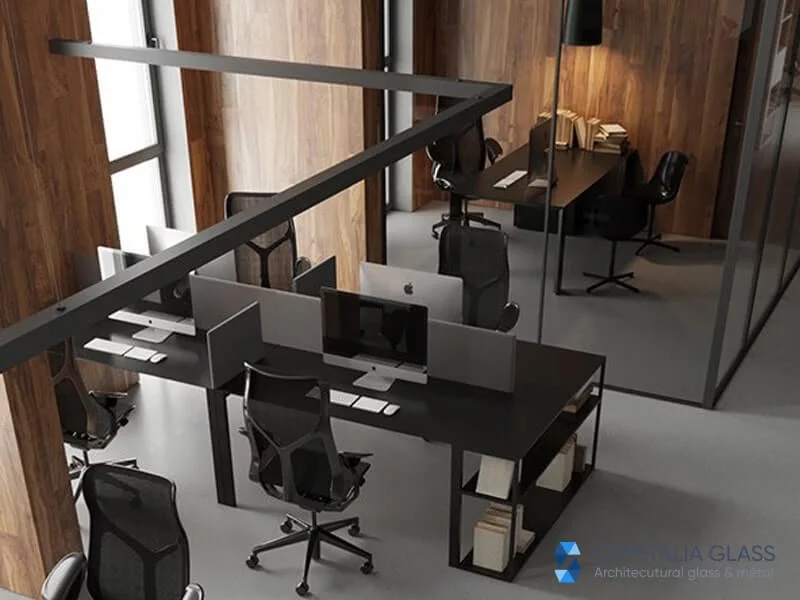
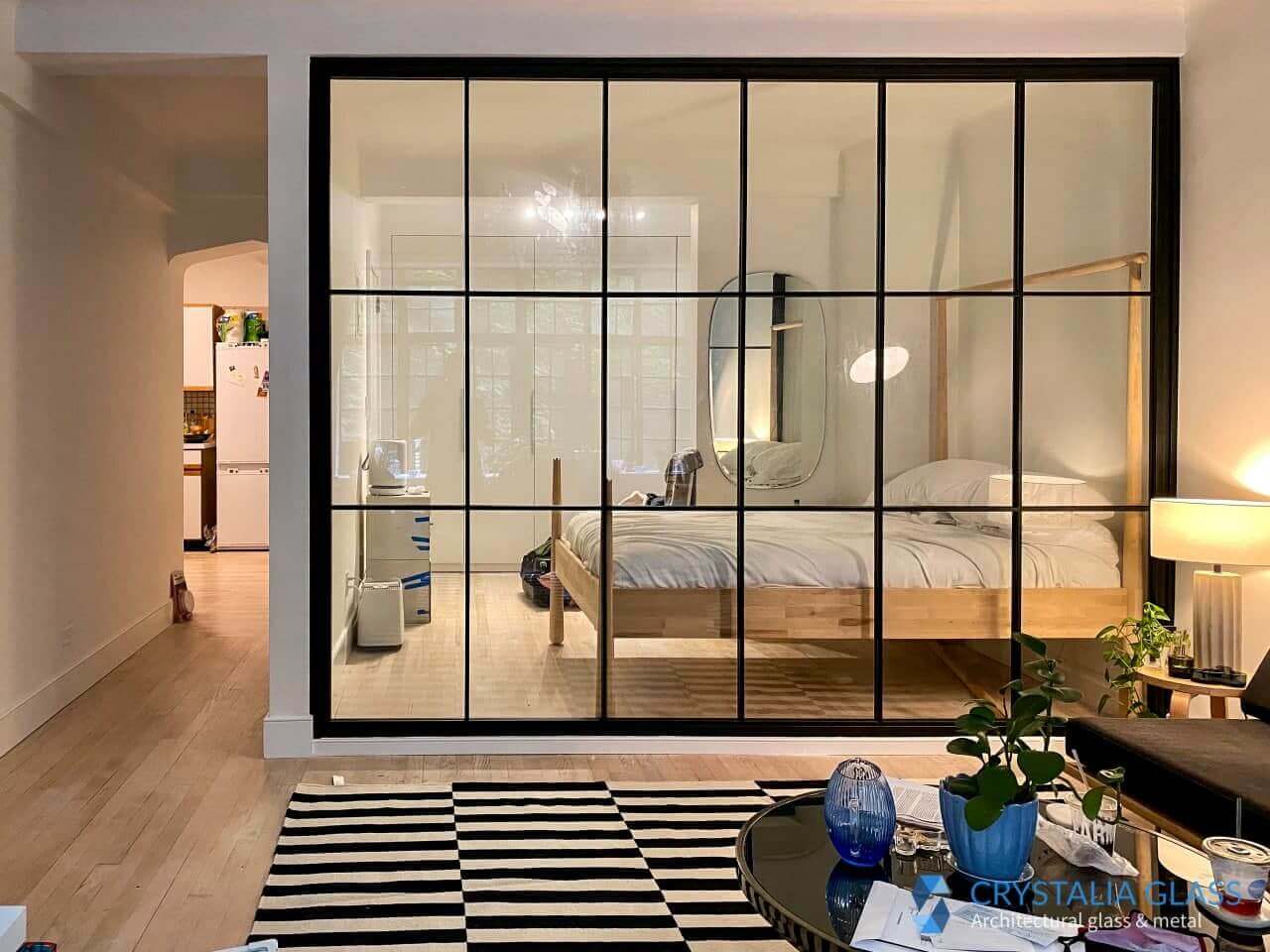
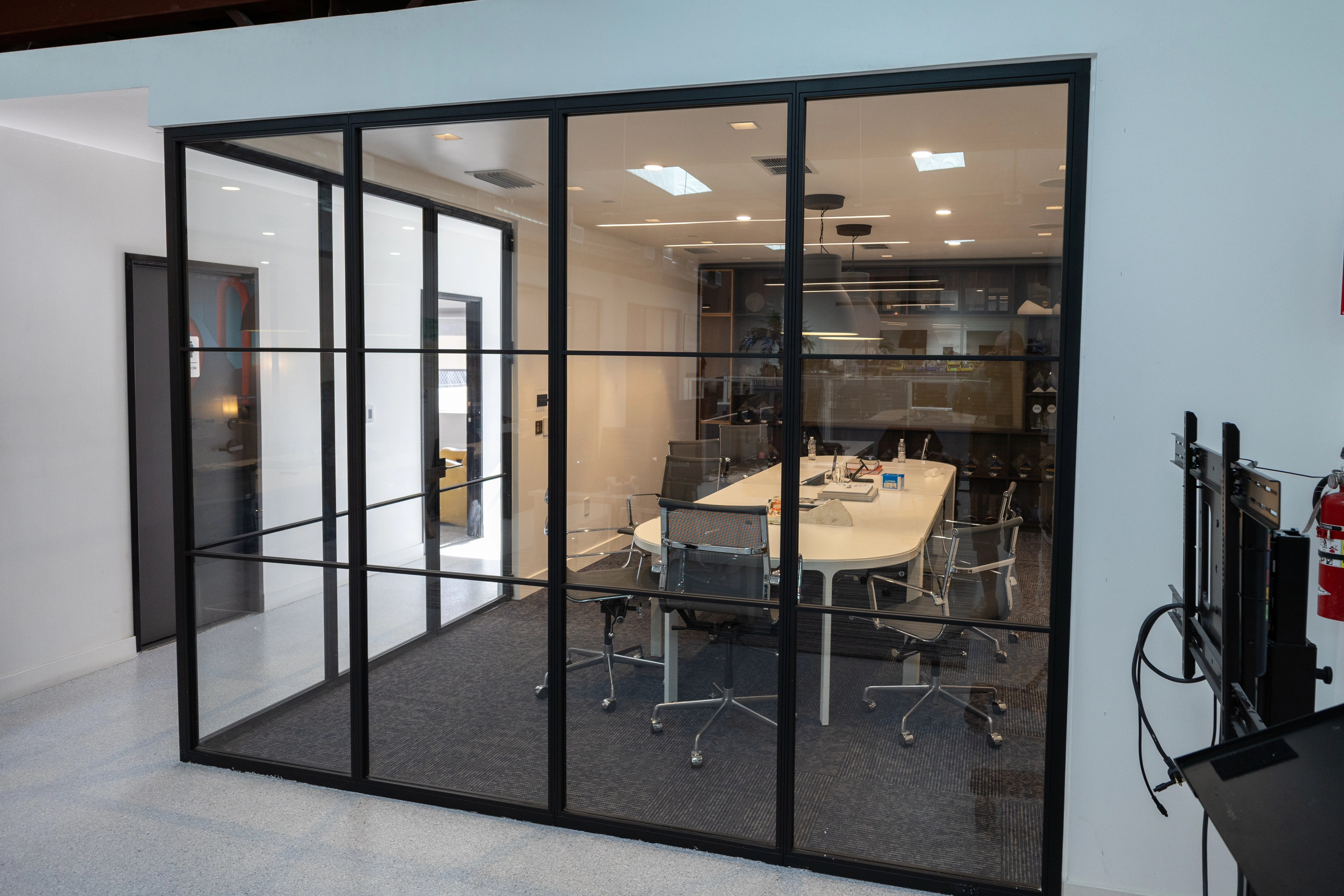
Custom steel gives much greater freedom in design and creates a more distinctive loft-style look. It is the right solution when the conference room needs stronger lines, more visual rhythm, and a more dramatic presence. It also offers unmatched customization options, which is especially important for projects where the final result needs to reflect a very specific interior concept.
If the office design leans industrial, luxury, or highly custom, steel can do things aluminum simply is not trying to do. In that case, choosing custom steel is not just a design preference. It is often the most logical architectural choice.
Layout Flexibility Can Save the Whole Project
One of the most common mistakes in office planning is choosing a beautiful partition system that becomes complicated the moment it meets a real floor plan.
Conference rooms are rarely built under ideal showroom conditions. Ceiling heights vary. Footprints can be awkward. Some rooms need to be fully enclosed, while others have to integrate into a larger office layout in a more open way. This is exactly why flexibility matters.
A system like KOMPAS works well in this context because it was designed with commercial layouts in mind. It gives architects and designers more room to solve practical challenges without compromising the visual result. When a conference room has to work with the office instead of fighting against it, flexibility becomes a major advantage.
The Glass You Choose Changes the Feel of the Room
It is easy to talk about conference room glass walls as if all glass were the same. It is not. The glass selection changes both the look and the performance of the room.
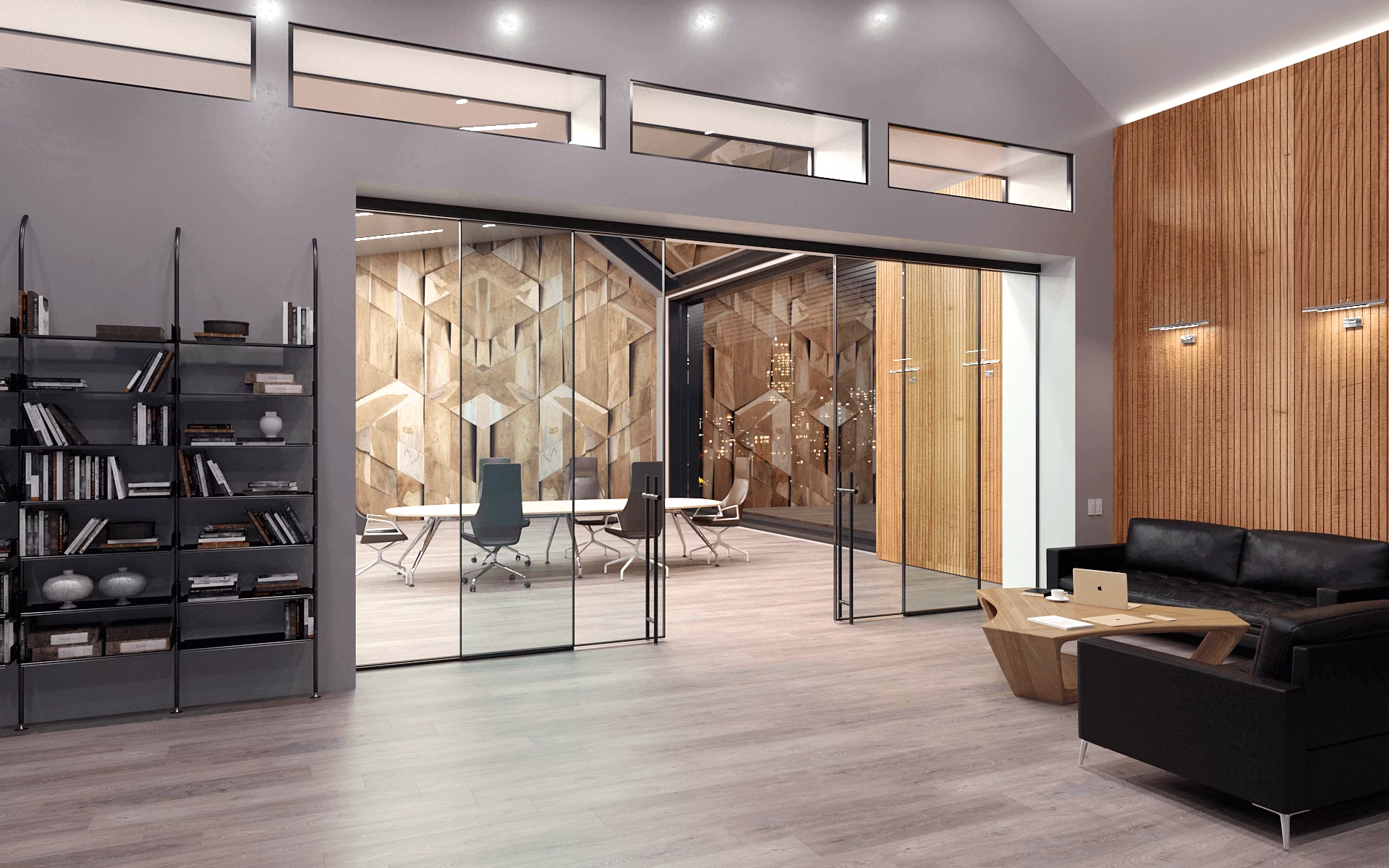
Clear glass creates openness and lets light flow naturally through the office. Frosted glass adds privacy while keeping the room bright. Low-iron glass delivers a cleaner, crisper appearance with less visible tint. Decorative and privacy-oriented finishes can also shift the atmosphere of the space in a major way.
This matters more than it may seem at first. The right glass can make a conference room feel more premium, more private, or more visually light depending on the goal. It is one of those decisions that quietly affects everything.
Installation Should Never Be an Afterthought
Even the best-looking conference room glass walls will only perform well if the surrounding conditions are properly considered.
The structure of the opening matters. Ceiling conditions matter. Support points matter. Installation is where design stops being an idea and becomes a real architectural element inside the office. If that part is treated casually, even a strong system can underperform.
That is why conference room glass walls should be planned as part of the space itself, not as a decorative layer added at the end. The better the planning, the cleaner the installation and the better the long-term result.
Which System Is Right for Your Conference Room?
The answer depends on what matters most in your space.
If your priority is stronger acoustic performance, commercial functionality, and a clean modern office look, KOMPAS is often the best fit. It is especially well suited for conference rooms where sound insulation and planning flexibility are important.
If your priority is custom design freedom, bold visual character, and a stronger loft-inspired aesthetic, Custom Steel is usually the better option. It offers a level of design customization that is difficult to match and works beautifully when the conference room needs to become a real statement piece.
In the end, the best conference room glass wall is not the one that only photographs well. It is the one that fits the way your office actually works. Good design should absolutely look good, but it should also solve problems, support privacy, and make the whole space feel smarter from day one.