'/%3e%3c/mask%3e%3cg%20mask='url(%23mask0_3045_12)'%3e%3crect%20width='22'%20height='22'%20fill='%23404D63'/%3e%3c/g%3e%3cdefs%3e%3cpattern%20id='pattern0_3045_12'%20patternContentUnits='objectBoundingBox'%20width='1'%20height='1'%3e%3cuse%20xlink:href='%23image0_3045_12'%20transform='scale(0.01)'/%3e%3c/pattern%3e%3cimage%20id='image0_3045_12'%20width='100'%20height='100'%20xlink:href='data:image/png;base64,iVBORw0KGgoAAAANSUhEUgAAAGQAAABkCAYAAABw4pVUAAAAAXNSR0IArs4c6QAAAARnQU1BAACxjwv8YQUAAAAJcEhZcwAADsMAAA7DAcdvqGQAAATmSURBVHhe7Z1p6GVjHMf/DGXGlmXIFlnSWAahZCkyXpB4IUZeKBlblkRSIu9QijfyQqFkKaXsKZkhspQU2RIvRJbInn37fMfc+nl6zj33uf9zz/k9d36f+tT8597z3Oe53865Z3t+Z2FGHILr8Bf8J/FzvBWXokc2wcvwQ/wLbd9/xzfxNKyGo/E3tAPJ+TIuQW/cibn+pl6MVfAu5gaQ81L0xFH4N+b6mvoTLkfX7I65zjf5KHriesz1s8nT0TUHo+3wW2g5Fu3rL6Inbkbbv0vQkm7OzkHXRCDOiEBmzGa4XYHHoO1wWyCvYK6dobwdbf/aArkAc+00uRVOxZH4AuaOI0psC8S7bYFM48d4Nk7MKvwTc42VGoE0ez5OxGuYa2AaI5Bmv8PWsxU6crZrhw6Svinwe7Qf2hbIH5hrZyjTTXRbIDo4zLXTpE692OWPwLFsi3YBpVhC7GWN50m0y+v7GEsE8v/+RSADM/eBvI97G89C+7r3QG5A2//70b7uPhCd/bTLt/kweuJazPWzyZOxhN4DEc+jbWOcWmM8sT9Oci1H6kLblljCIIHsh1+ibSenVn+PXIVt10S0e3wKljJIIGInvAPfwI+MH+BaPA91qdQrJ+Dj+B7a/r+ND+ABOA2DBRLkiUCcEYE4IwJxRgTijEUH8iMeHnamzkzY77c4kHC2RiDOjECcWRyIrug9G3bmV2i/3+JAYi+rW2K31xkRiDMiEGdEIM6IQJwRgTgjAnFGBOKMCMQZEcgE9Dk1OwKZgBvxMdxt/V+zJQJp4UAc3RinsV6Is7w9KQIZgzZVqiZhx6vpZlPPA5yACGQMV6Adqyy9V7eUCKSBvVD3C9ix9nFrawTSwDNox6kLRzvirIlAMpyLdoyyrwIAEUiCbgL/Gu0Yn8K+iEASHkI7vh9wD+yLCMRwKtqxyb7rdUUgG9gGP0E7tpdwU+yTCGQD6ezZX3EF9k0EAsdhOkVNleOGYKMPZAvU1Gw7Js2d3xyHYKMP5Ca041EdF5WeGorqAunyaPlQTIu93IZDUlUgqgLxLV65/q/FoTO5r6Mdi2bRls4r75pqAtkH7W7pLbiY6xLXoB2HftRPwqGpIhAdC6h8t/1ceR9O8+OrcH9G29Y96IFq1hAVz1SBL/vZ8mks2cxorXoObRsqgbE9eqCq35CDMD2alq/iDjgJazBd/kz0QlWBCJ3oewdtH6RKXOyJ49gV07XMWynz6gIR2ryk17rlp6i1qIlH0L5ffVdInqgyELEMn0DbF6k1IDeIMzB9r+4g8Ua1gQhV1b4XbX+k9qDsUwlUMfoztO/Rw2Q8VhuqOhChLzUtuyd1CmS0BtyN9jXVslLNLo9UH8iIyzF9/JDUnSLpmVyV6fPK3AQiVmNb+T0VTNOmzitzFYg4EXUd3PZxpObUH4aembtAhIq4fIG2n1Lnv7wzl4GIfVGPtRv1U7UcdTHKO3MbiNgZdYpdP+rH6z8qYK4DEVvjRf/9swrmPpDaiECcEYE4IwJxRgTijAjEGRGIMyIQZ0QgzohAnBGBOCMCcUYE4owIxBkRiDMiEGdEIM4oDkS3cNoF4ukI3Zo+HUHTMFrJTQkIu1c3/u2CrVyNuQbCbn0QJ0L3016HmoCZayhcnLr78i4snoC6FFfiqrAzNUdeO05BEARB0DELC/8C1D9SupOCPVIAAAAASUVORK5CYII='/%3e%3c/defs%3e%3c/svg%3e)
Glass partitions have become one of the most popular ways to divide interior space without sacrificing light, openness, or a sense of connection. They suit everything from modern offices and retail spaces to homes seeking a stylish way to separate rooms. But the glass itself is only part of the equation. The frame material—steel, aluminum, or timber—shapes the partition's appearance, performance, cost, and longevity just as much as the glass.
This guide compares the three most common frame materials in plain terms, so whether you're an architect specifying a commercial fit-out or a homeowner planning your first partition, you can choose with confidence.
Overview: Comparing Steel, Aluminum, and Timber Glass Partitions
The frame is the structural and visual backbone of any glass partition. It carries the weight of the glass, defines the sightlines (how thick or slim the visible profiles appear), and sets the overall aesthetic—industrial, minimal, or warm and natural.
Each material brings distinct strengths:
- Steel offers the slimmest sightlines and a striking industrial look, but at a premium price.
- Aluminum is lightweight, affordable, and endlessly versatile—the workhorse of commercial spaces.
- Timber delivers natural warmth and character, with sustainability appeal but higher maintenance.
Choosing the right one comes down to balancing budget, aesthetics, durability, maintenance, and performance (especially acoustic and fire requirements). Let's look at each in detail.
Steel Glass Partitions
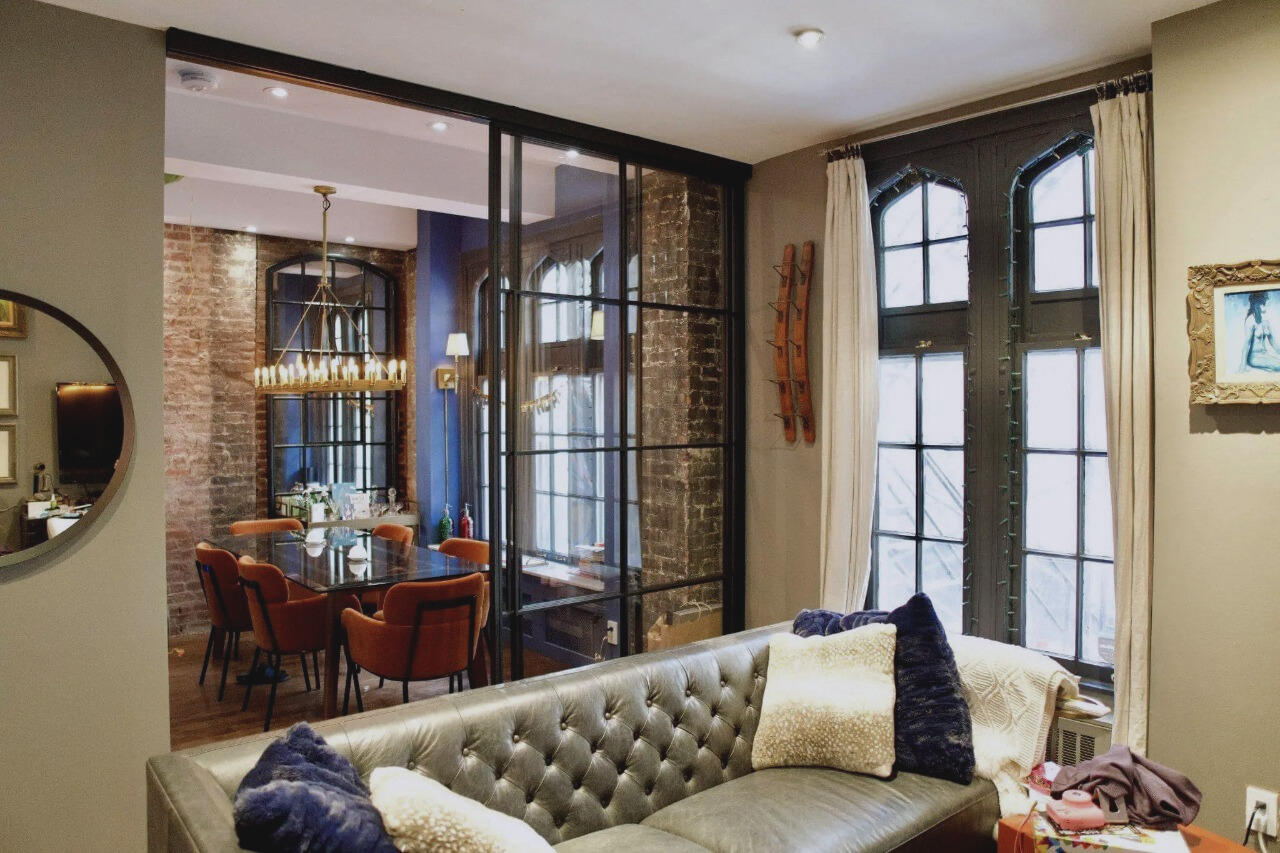
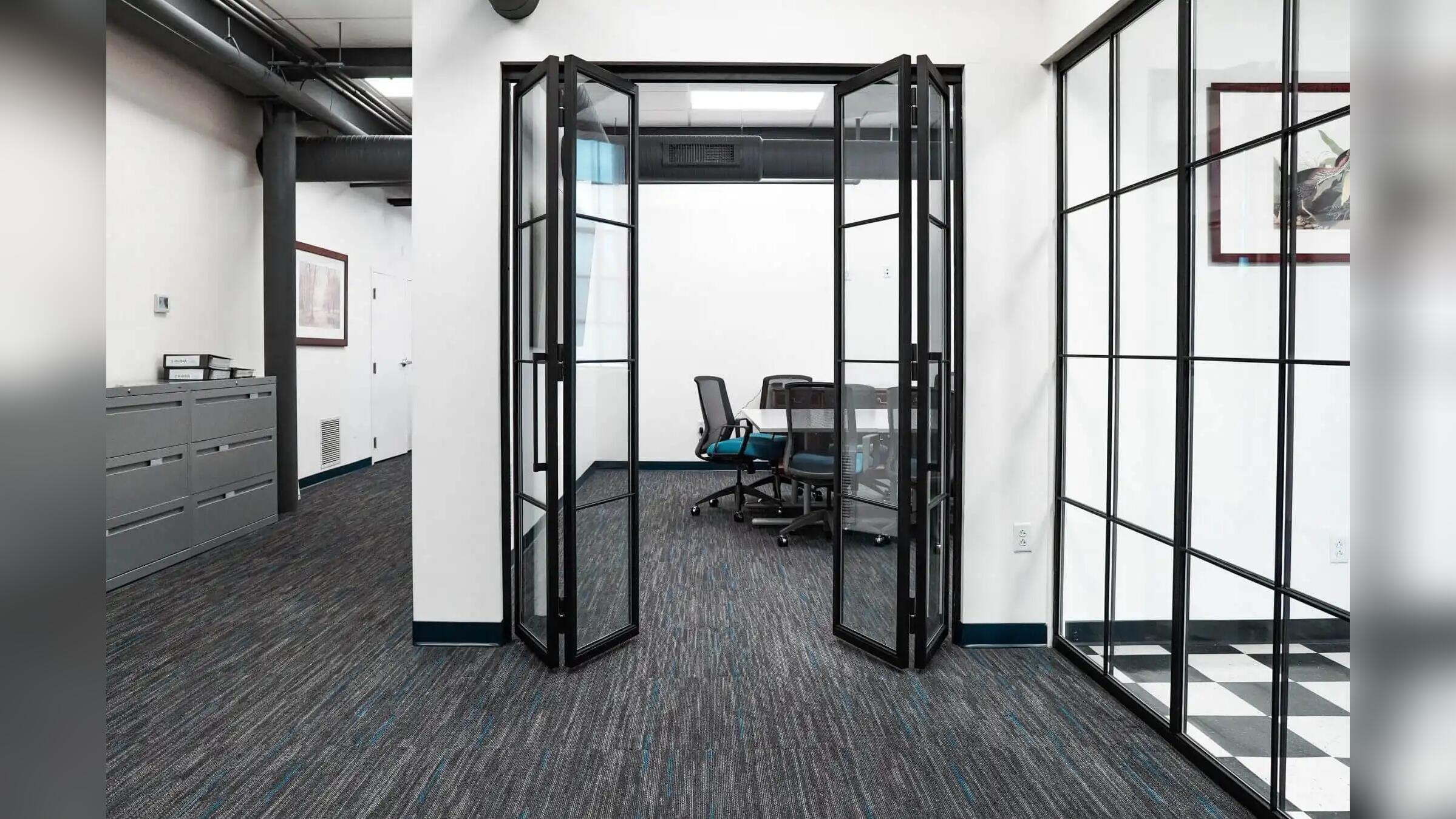
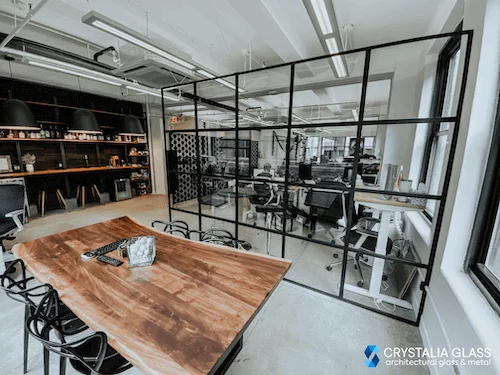
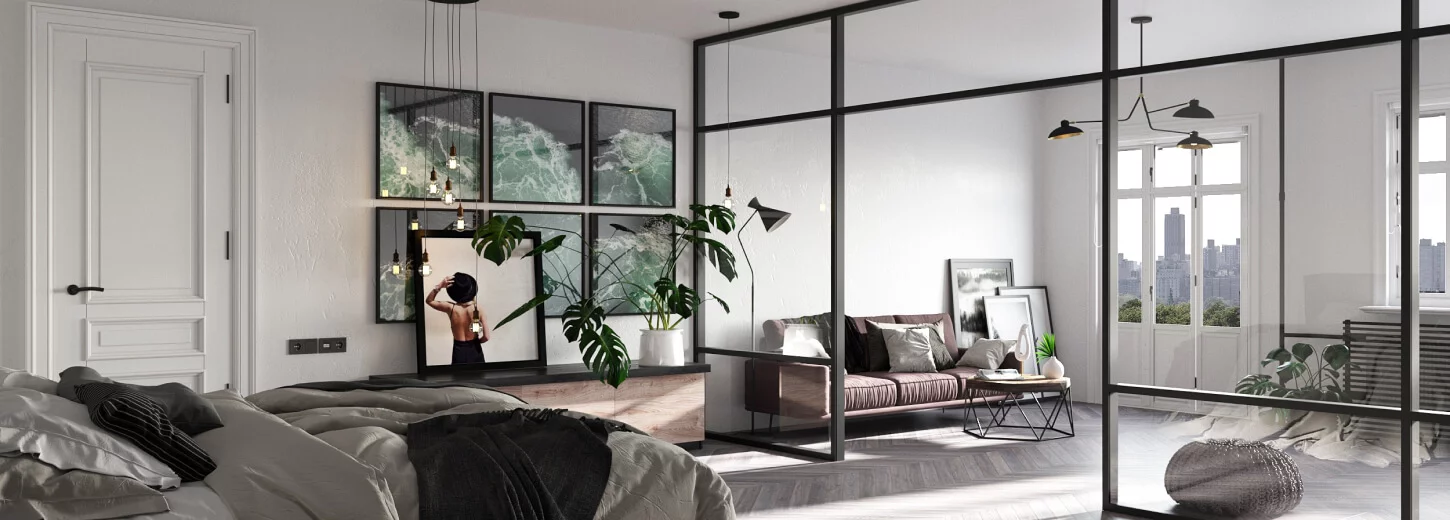
Steel framed glass partitions are best known for the Crittall-style look—black, gridded, industrial-chic dividers that have surged in popularity across both commercial and residential design.
Why people choose steel:
- Slim sightlines: Steel's superior strength-to-size ratio allows for very thin frames and large glass panes with minimal visible framing. This creates an elegant, refined appearance that aluminum and timber struggle to match.
- Strength and durability: Steel is extremely robust and resistant to warping, denting, and impact. A well-maintained steel partition can last decades.
- Aesthetic statement: The crisp, dark grid lines suit loft conversions, heritage buildings, premium offices, and design-led interiors.
- Fire performance: Steel is non-combustible and can be engineered into systems achieving high fire ratings (often 30–60+ minutes), making it suitable for fire-rated separations.
Trade-offs:
- Cost: Steel is the most expensive of the three, both in material and fabrication.
- Weight: Heavier framing can require more robust fixings and structural consideration.
- Corrosion: Untreated steel can rust, so proper powder-coating or galvanizing is essential—especially in humid environments.
Best for: Premium offices, statement residential spaces, heritage refurbishments, and anywhere the slim industrial aesthetic and fire performance justify the higher spend.
Aluminum Glass Partitions
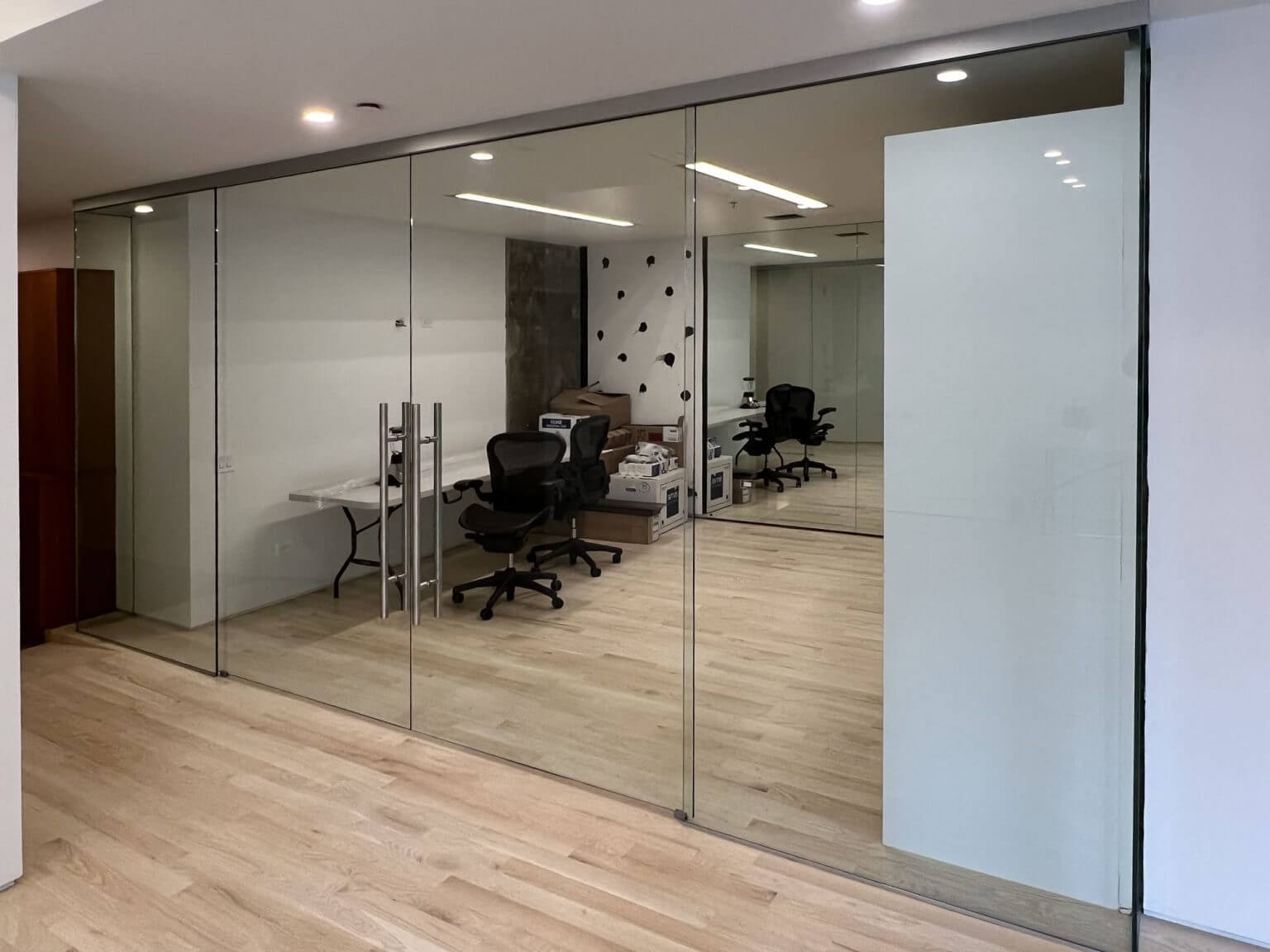
Aluminum glass partitions are the most widely used system in commercial environments—and for good reason. They strike a strong balance between cost, performance, and flexibility.
Why people choose aluminum:
- Lightweight: Easy to handle, transport, and install, which lowers labour costs and simplifies fixing.
- Corrosion resistant: Aluminum naturally resists rust, making it low-maintenance and suitable for a wide range of environments.
- Affordable: Generally the most cost-effective framed option, with excellent value for large-scale rollouts.
- Versatile finishes: Available in virtually any powder-coated colour or anodized finish, including slim black profiles that mimic the steel look at a lower price point.
- System flexibility: Easily integrated with doors, double-glazed acoustic units, and demountable (relocatable) systems.
Trade-offs:
- Wider sightlines than steel: To achieve the same strength, aluminum profiles are typically thicker than steel, so the framing is more visible.
- Fire performance varies: Standard aluminum has a relatively low melting point; fire-rated performance requires specially engineered systems and usually doesn't reach steel's upper ratings.
- Less "premium" feel: While clean and contemporary, it lacks the gravitas of steel or the warmth of timber.
Best for: Office fit-outs, meeting rooms, retail, healthcare, and any commercial project where budget, speed, and flexibility are priorities.
Timber Glass Partitions
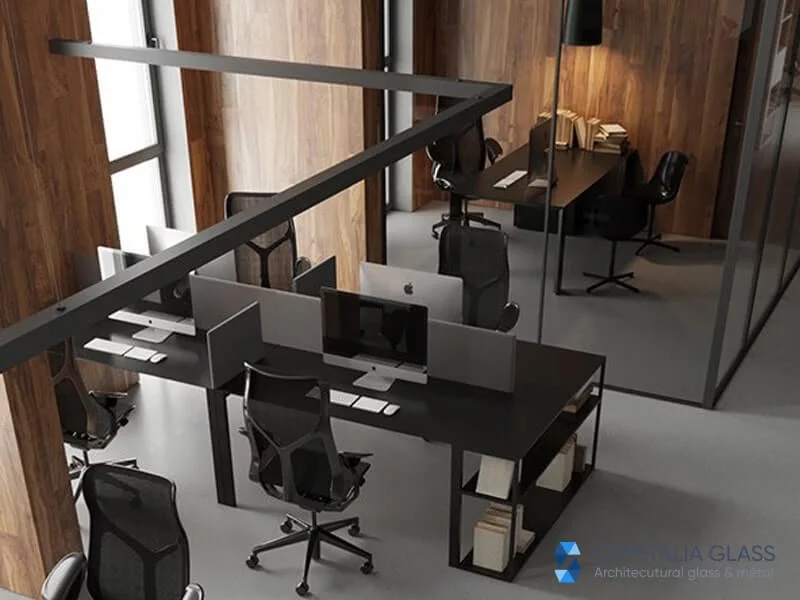
Timber framed glass partitions bring warmth, texture, and a natural aesthetic that metal frames can't replicate. They're a popular choice where comfort and character matter as much as function.
Why people choose timber:
- Natural warmth: Wood softens an interior and creates an inviting, organic feel—ideal for hospitality, boutique offices, and homes.
- Design character: Available in many species, stains, and finishes for a tailored look.
- Sustainability potential: When responsibly sourced (look for FSC or PEFC certification), timber is a renewable, lower-carbon material compared to energy-intensive metals.
- Decent acoustic potential: Timber's density can contribute to good sound insulation when paired with the right glazing.
Trade-offs:
- Maintenance: Wood needs periodic upkeep—resealing, refinishing, and protection from moisture. It can warp, swell, or crack in fluctuating humidity if not maintained.
- Wider profiles: Timber frames are generally bulkier than steel or aluminum, reducing the glass-to-frame ratio.
- Fire performance: Untreated timber is combustible. Fire-rated timber systems exist but require specific engineering and treatments.
- Cost variability: Pricing ranges widely depending on the species and quality; high-end hardwoods can rival or exceed steel.
Best for: Residential interiors, hospitality, biophilic design schemes, and spaces prioritizing warmth and sustainability over slim sightlines.
Head-to-Head Comparison
Here's how the three materials stack up across the criteria that matter most.
Steel is the strongest and most reliable option for modern glass partition systems. It offers excellent durability, slim sightlines, strong fire performance, and low maintenance when properly coated. Although it is heavier and typically more expensive, steel delivers a premium architectural look and long-term structural stability.
Aluminum is a lighter and more cost-efficient alternative. It provides very good durability, very low maintenance, and a clean, versatile appearance. However, it does not offer the same strength, slimness, or fire performance as steel unless specially engineered.
Timber is generally the least practical option for high-performance partition systems. While it can create a warm, natural appearance, it is bulkier, less stable, and more dependent on regular maintenance. It may require resealing or refinishing over time, and its durability varies by wood species, finish quality, and care. Timber also has limited fire performance unless specially treated.
Overall, steel is the best choice for durable, slim, premium, and long-lasting partition systems. Aluminum works well when weight and cost are key factors. Timber is mainly suitable when a natural aesthetic is more important than long-term performance, maintenance, and fire resistance.
Cost Comparison
On a purely relative basis, aluminum is typically the most budget-friendly, offering strong value at scale. Steel commands a premium due to material cost and skilled fabrication. Timber sits in the middle to high range, depending heavily on the species—softwoods are affordable, while premium hardwoods can cost as much as steel. Remember to factor in installation: steel's weight and timber's maintenance both add to lifetime cost.
Aesthetics and Design
- Steel: Refined, minimal, industrial. The slimmest frames and the most "designer" presence.
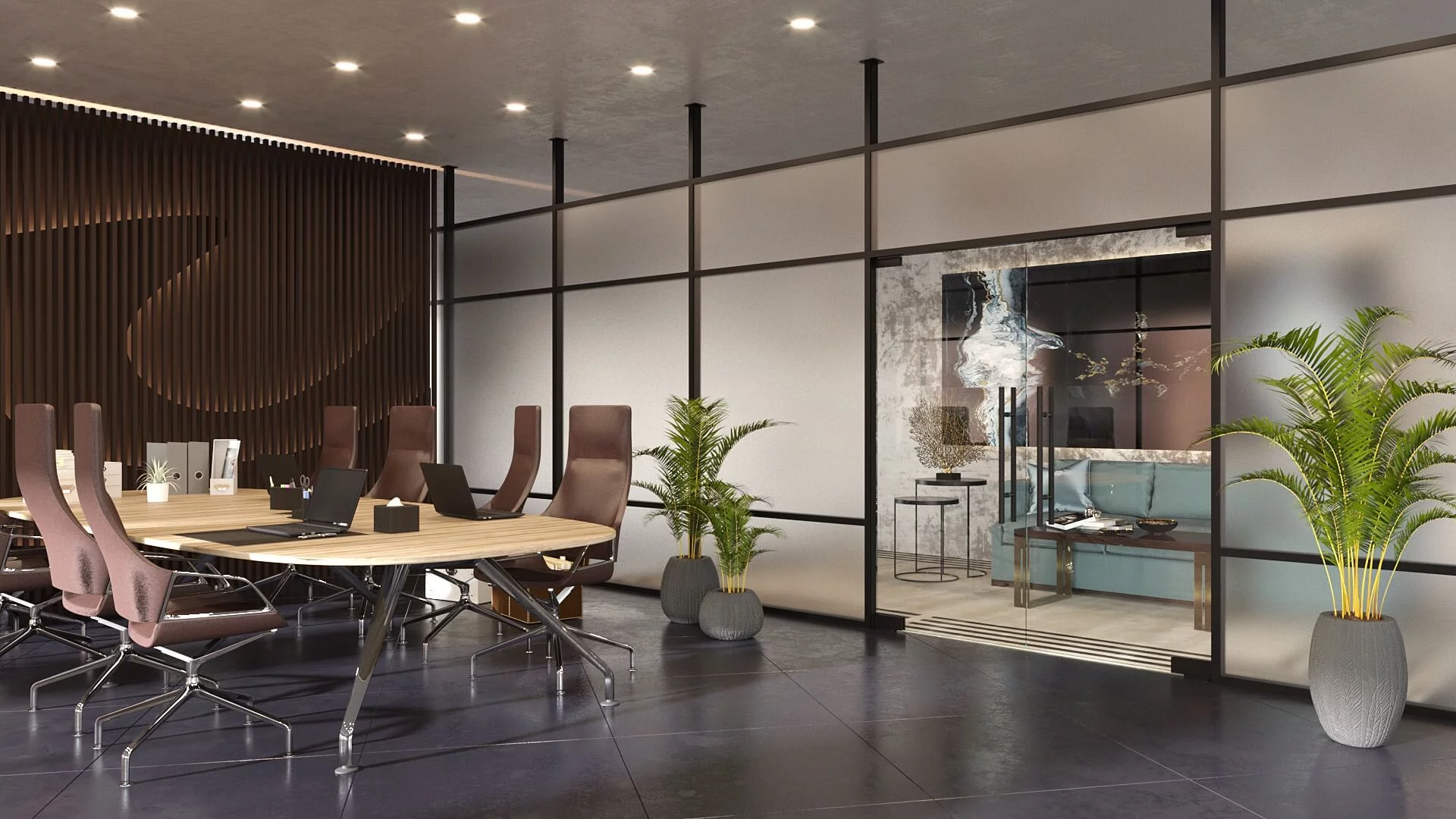
- Aluminum: Clean and contemporary, with the widest range of colours and finishes—including steel-look black profiles at a fraction of the cost.
- Timber: Warm, tactile, and natural; the best choice for cozy, organic, or biophilic interiors.
Durability and Maintenance
Steel and aluminum both offer excellent longevity with minimal upkeep—steel needs a quality protective coating to prevent rust, while aluminum naturally resists corrosion. Timber is durable too, but only with consistent maintenance; neglect can lead to warping or finish degradation. For low-touch, long-life performance, the metals lead.
How to Choose the Right Glass Partition for Your Space
Use this simple framework to narrow your decision:
1. Start with your budget.
- Tight budget or large-scale rollout → Aluminum
- Premium budget with a design focus → Steel
- Mid-to-high budget favouring warmth → Timber
2. Match the aesthetic to your space.
- Industrial / minimal / heritage → Steel (or aluminum for a similar look at lower cost)
- Modern, clean, flexible commercial → Aluminum
- Warm, natural, residential or hospitality → Timber
3. Check performance requirements.
- Need fire-rated separation? → Steel is the strongest performer; aluminum and timber require specially engineered systems.
- Need acoustic privacy? → Any frame works if paired with the right glazing (double-glazed acoustic units, seals, and door specifications matter more than the frame here).
4. Factor in the building type.
- High-traffic commercial → Aluminum (durable, low-maintenance, cost-effective)
- Premium or design-led space → Steel
- Homes and boutique interiors → Timber or Steel
5. Weigh sustainability goals.
- Prioritize renewable materials → Timber (FSC/PEFC certified)
- Prioritize recyclability → Aluminum (highly recyclable, though energy-intensive to produce initially)
- Steel is also recyclable but carries a high production footprint.
Conclusion
Choosing between steel, aluminum, and timber glass partitions comes down to balancing cost, aesthetics, durability, maintenance, and performance.
- Choose steel for the slimmest, most refined industrial look and top-tier fire performance—if your budget allows.
- Choose aluminum for unbeatable value, versatility, and low-maintenance durability—ideal for most commercial fit-outs.
- Choose timber for natural warmth, character, and renewable sustainability—perfect for homes and hospitality, provided you'll keep up with maintenance.
Define your priorities first—budget, look, performance, and sustainability—and the right material will quickly become clear. Whichever you choose, pairing the frame with the correct glazing specification is what ultimately delivers the acoustic and fire performance your space needs.