'/%3e%3c/mask%3e%3cg%20mask='url(%23mask0_3045_12)'%3e%3crect%20width='22'%20height='22'%20fill='%23404D63'/%3e%3c/g%3e%3cdefs%3e%3cpattern%20id='pattern0_3045_12'%20patternContentUnits='objectBoundingBox'%20width='1'%20height='1'%3e%3cuse%20xlink:href='%23image0_3045_12'%20transform='scale(0.01)'/%3e%3c/pattern%3e%3cimage%20id='image0_3045_12'%20width='100'%20height='100'%20xlink:href='data:image/png;base64,iVBORw0KGgoAAAANSUhEUgAAAGQAAABkCAYAAABw4pVUAAAAAXNSR0IArs4c6QAAAARnQU1BAACxjwv8YQUAAAAJcEhZcwAADsMAAA7DAcdvqGQAAATmSURBVHhe7Z1p6GVjHMf/DGXGlmXIFlnSWAahZCkyXpB4IUZeKBlblkRSIu9QijfyQqFkKaXsKZkhspQU2RIvRJbInn37fMfc+nl6zj33uf9zz/k9d36f+tT8597z3Oe53865Z3t+Z2FGHILr8Bf8J/FzvBWXokc2wcvwQ/wLbd9/xzfxNKyGo/E3tAPJ+TIuQW/cibn+pl6MVfAu5gaQ81L0xFH4N+b6mvoTLkfX7I65zjf5KHriesz1s8nT0TUHo+3wW2g5Fu3rL6Inbkbbv0vQkm7OzkHXRCDOiEBmzGa4XYHHoO1wWyCvYK6dobwdbf/aArkAc+00uRVOxZH4AuaOI0psC8S7bYFM48d4Nk7MKvwTc42VGoE0ez5OxGuYa2AaI5Bmv8PWsxU6crZrhw6Svinwe7Qf2hbIH5hrZyjTTXRbIDo4zLXTpE692OWPwLFsi3YBpVhC7GWN50m0y+v7GEsE8v/+RSADM/eBvI97G89C+7r3QG5A2//70b7uPhCd/bTLt/kweuJazPWzyZOxhN4DEc+jbWOcWmM8sT9Oci1H6kLblljCIIHsh1+ibSenVn+PXIVt10S0e3wKljJIIGInvAPfwI+MH+BaPA91qdQrJ+Dj+B7a/r+ND+ABOA2DBRLkiUCcEYE4IwJxRgTijEUH8iMeHnamzkzY77c4kHC2RiDOjECcWRyIrug9G3bmV2i/3+JAYi+rW2K31xkRiDMiEGdEIM6IQJwRgTgjAnFGBOKMCMQZEcgE9Dk1OwKZgBvxMdxt/V+zJQJp4UAc3RinsV6Is7w9KQIZgzZVqiZhx6vpZlPPA5yACGQMV6Adqyy9V7eUCKSBvVD3C9ix9nFrawTSwDNox6kLRzvirIlAMpyLdoyyrwIAEUiCbgL/Gu0Yn8K+iEASHkI7vh9wD+yLCMRwKtqxyb7rdUUgG9gGP0E7tpdwU+yTCGQD6ezZX3EF9k0EAsdhOkVNleOGYKMPZAvU1Gw7Js2d3xyHYKMP5Ca041EdF5WeGorqAunyaPlQTIu93IZDUlUgqgLxLV65/q/FoTO5r6Mdi2bRls4r75pqAtkH7W7pLbiY6xLXoB2HftRPwqGpIhAdC6h8t/1ceR9O8+OrcH9G29Y96IFq1hAVz1SBL/vZ8mks2cxorXoObRsqgbE9eqCq35CDMD2alq/iDjgJazBd/kz0QlWBCJ3oewdtH6RKXOyJ49gV07XMWynz6gIR2ryk17rlp6i1qIlH0L5ffVdInqgyELEMn0DbF6k1IDeIMzB9r+4g8Ua1gQhV1b4XbX+k9qDsUwlUMfoztO/Rw2Q8VhuqOhChLzUtuyd1CmS0BtyN9jXVslLNLo9UH8iIyzF9/JDUnSLpmVyV6fPK3AQiVmNb+T0VTNOmzitzFYg4EXUd3PZxpObUH4aembtAhIq4fIG2n1Lnv7wzl4GIfVGPtRv1U7UcdTHKO3MbiNgZdYpdP+rH6z8qYK4DEVvjRf/9swrmPpDaiECcEYE4IwJxRgTijAjEGRGIMyIQZ0QgzohAnBGBOCMCcUYE4owIxBkRiDMiEGdEIM4oDkS3cNoF4ukI3Zo+HUHTMFrJTQkIu1c3/u2CrVyNuQbCbn0QJ0L3016HmoCZayhcnLr78i4snoC6FFfiqrAzNUdeO05BEARB0DELC/8C1D9SupOCPVIAAAAASUVORK5CYII='/%3e%3c/defs%3e%3c/svg%3e)
10 Creative Ideas for Modern Office Design
The modern office has to do more than provide a place to sit. It needs to support focused solo work and impromptu collaboration — often in the same day, in the same room. Modern office design addresses this by treating the workspace as an adaptive system: defined zones, flexible furniture, abundant natural light, and materials chosen as much for function as for appearance.
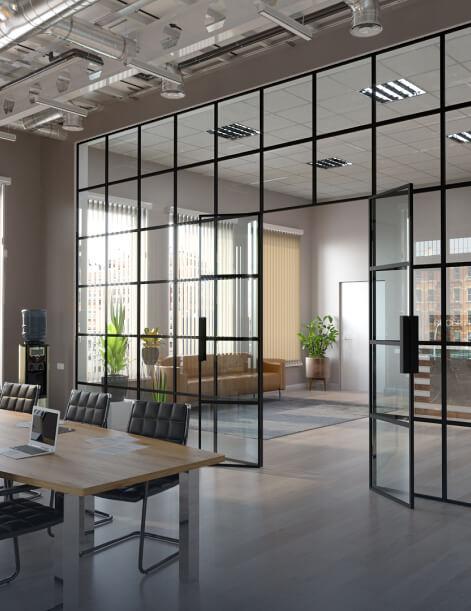
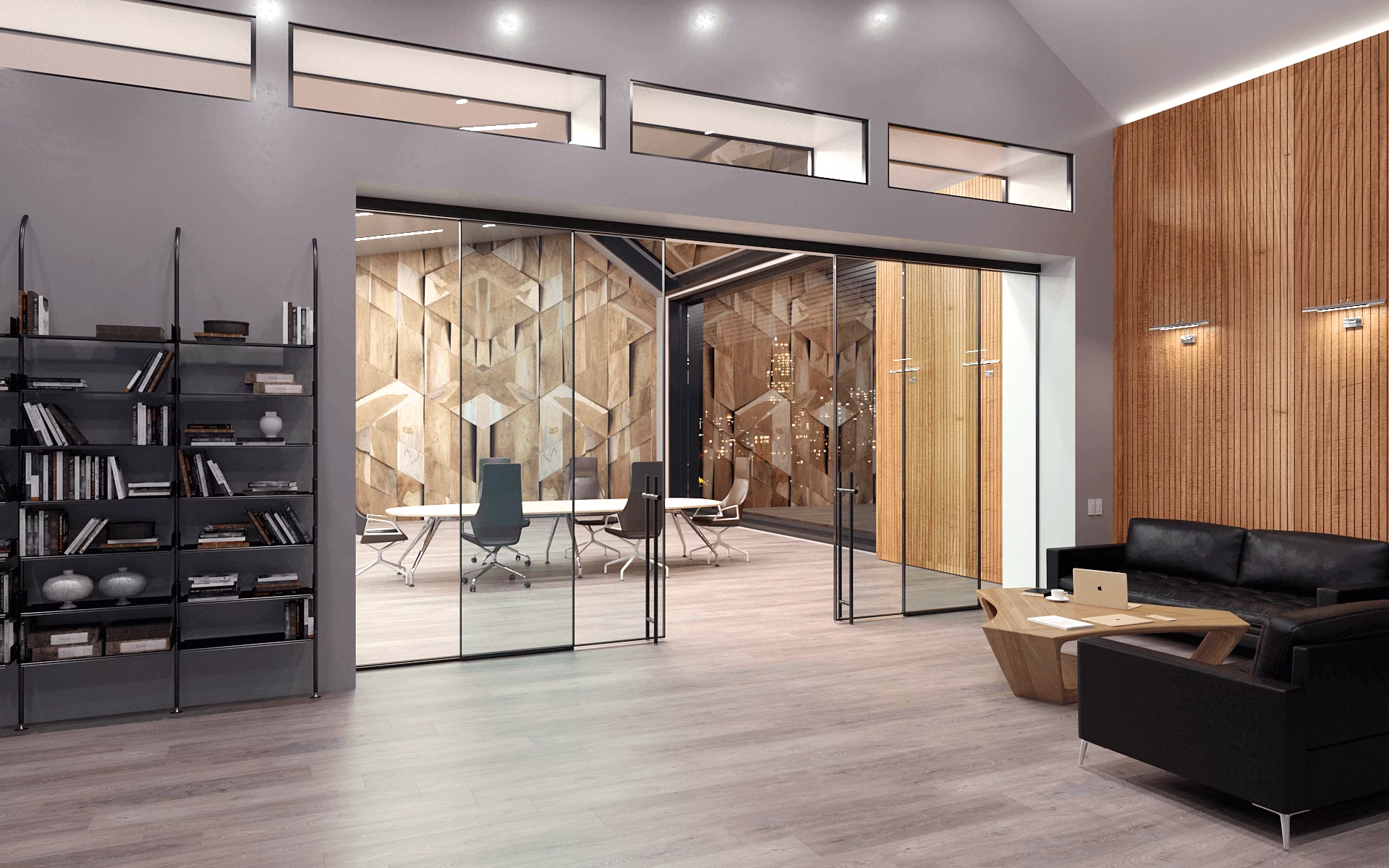
Glass partitions are one of the structural tools that makes this possible. They let you divide space without cutting off light or visibility — a key advantage when you're trying to balance openness with privacy. Crystalia Glass manufactures custom glass office partitions and glass walls for commercial interiors across the US, and the ideas below reflect how those systems perform in real office environments.
What Makes a Modern Office Design Work?
Modern office design is a workspace planning approach that combines open layouts, abundant natural light, flexible furniture, and defined zones to support both collaboration and focused work. It is not a single aesthetic — it is a set of principles that can be applied across industrial lofts, corporate floors, and boutique professional studios alike.
The core elements are consistent: open or semi-open floor plans, natural light extended through glass walls and partitions, ergonomic furniture arranged for multiple work modes, acoustic solutions that control sound without sealing off space, and a visual identity that reinforces the brand environment. When these elements work together, the result is an office that functions well and looks intentional.
10 Modern Office Design Ideas
1Zone Open Plans with Glass Partitions
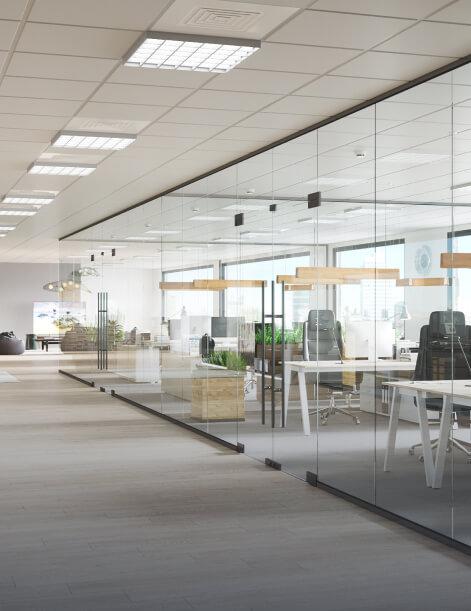
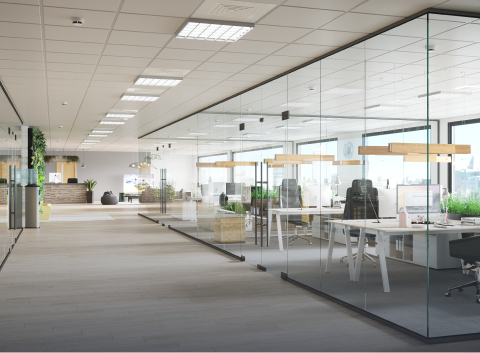
Open floor plans improve communication and reduce the closed-off feeling of cubicle grids — but without some structure, they produce noise, distraction, and a lack of privacy. Glass office partitions solve this by dividing the floor plan into functional zones without blocking natural light or sightlines.
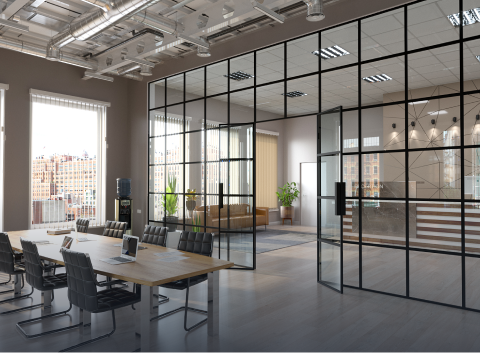
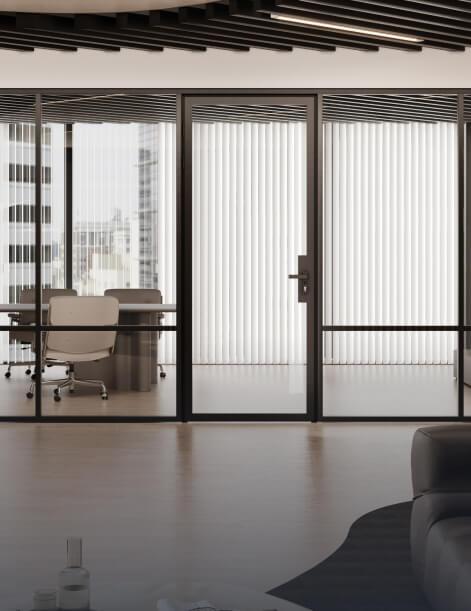
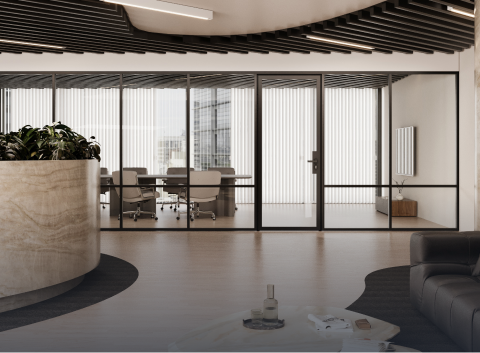
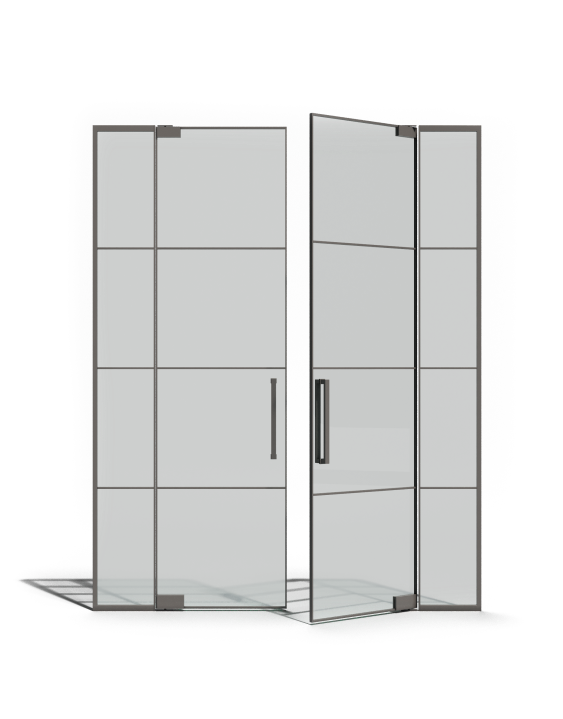
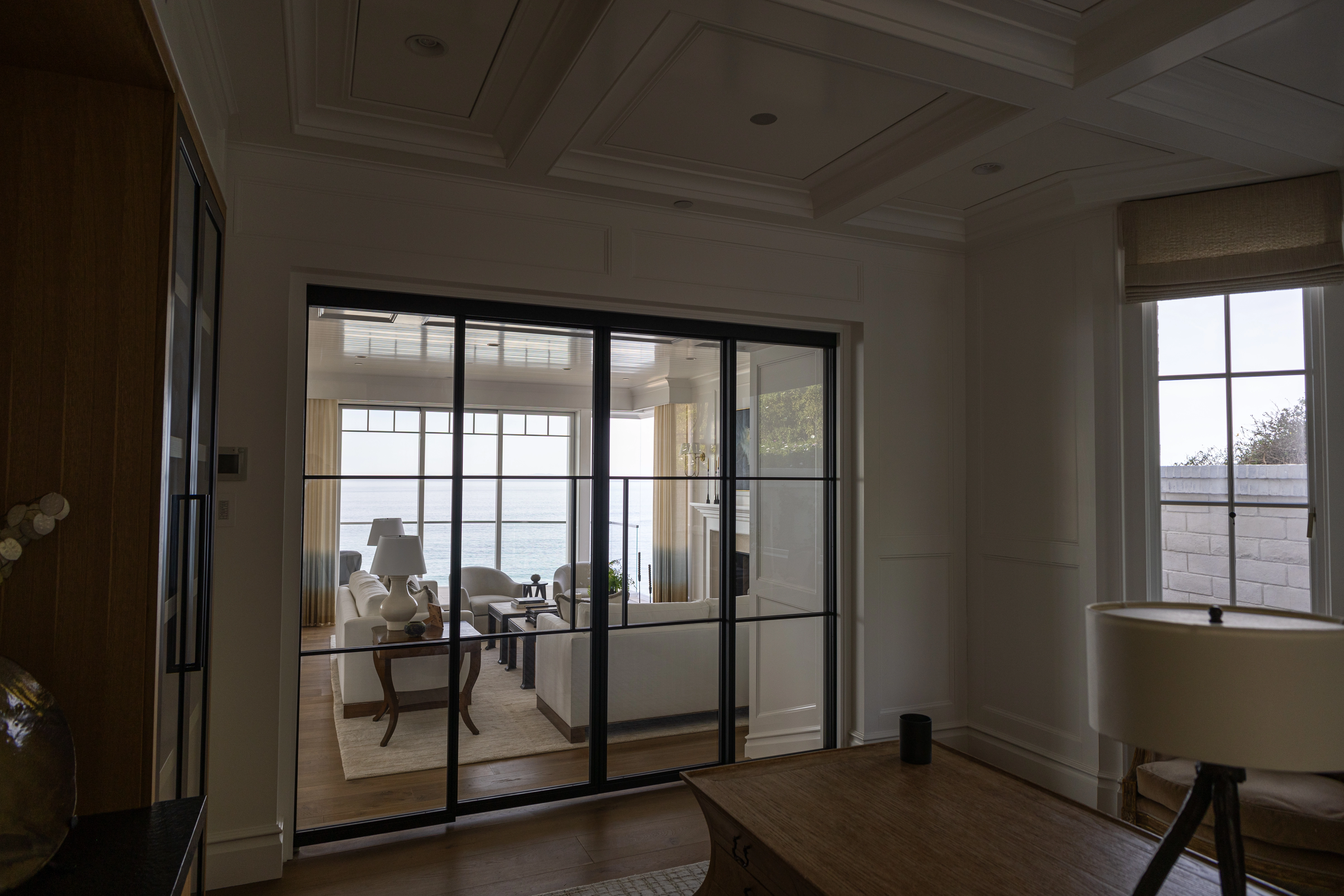
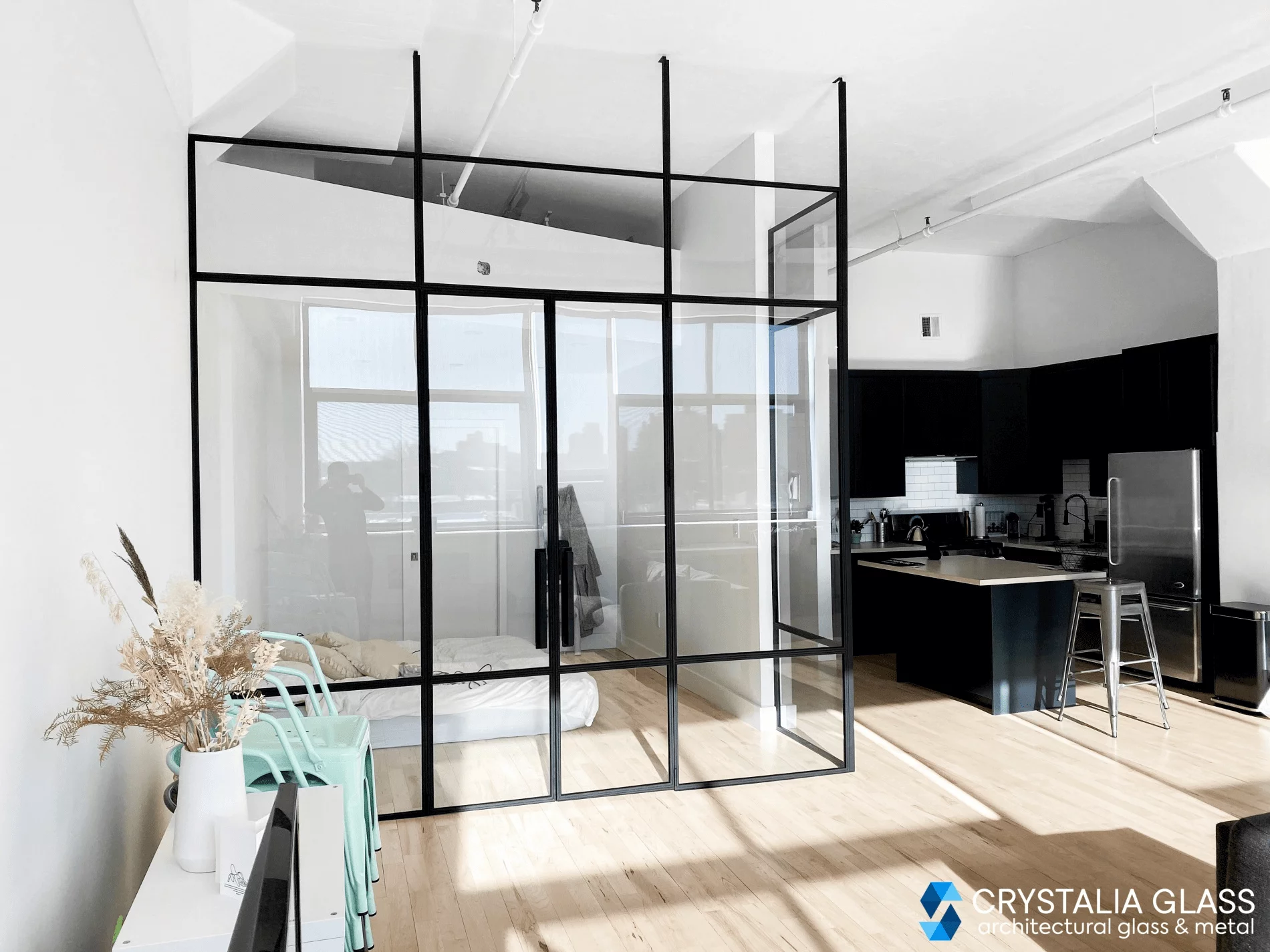
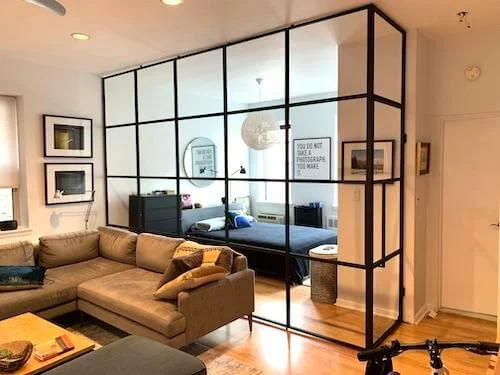
A frameless glass partition wall between a conference room and the main workspace keeps both areas visually connected while containing sound. Aluminum-framed glass systems offer a more structured industrial look. Both approaches define territory without the visual weight of drywall. For small offices especially, glass zoning can make a 600-square-foot space feel twice as large.
2Bring Biophilic Design Indoors
Biophilic design is the practice of incorporating natural elements — plants, natural materials, water, and views of the outdoors — into the built environment. Research consistently links biophilic workplaces with lower stress, faster cognitive recovery, and higher reported satisfaction.
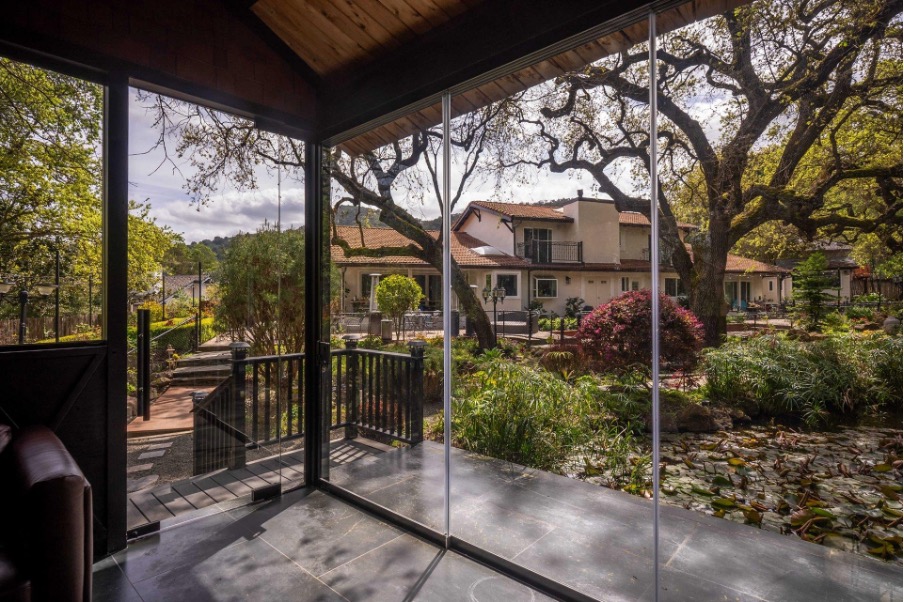
In office settings, biophilic design does not require a living wall or a rooftop garden. Potted plants at desk level, natural wood surfaces, stone or concrete finishes, and access to daylight are all biophilic signals. Glass partition walls contribute by maintaining visual connection to outdoor views and allowing natural light to travel deeper into the floor plate.
3Design for Hybrid and Flexible Work
Hybrid work is now the default for most knowledge-work organizations. Modern office design accommodates this by treating the layout as a variable — not a fixed assignment. Modular furniture that reconfigures for team meetings or solo focus sessions, movable partition systems, and hot-desking zones all support the unpredictable occupancy patterns of a hybrid workforce.
Glass partition systems built on track or sliding hardware are particularly useful here. Rooms can be opened for large-format collaboration, then closed again for private calls — without any construction. This flexibility is one of the key reasons glass partitions have become a standard feature in 2025–2026 commercial office fit-outs.
4Maximize Natural Light
Natural light is not a luxury feature in modern office design — it is a productivity variable. Studies have linked natural light exposure in the workplace with improved mood, reduced fatigue, and better sleep quality among employees. It is also a significant factor in energy costs.
Glass walls and glass office partitions extend daylight from perimeter windows into interior zones that would otherwise rely on artificial lighting all day. Low-iron glass — available from Crystalia Glass — maximizes light transmission by reducing the greenish tint of standard float glass, making interior spaces feel brighter and more connected to the outside.
5Acoustic Privacy Without Visual Barriers
One of the most common objections to open-plan offices is noise. Acoustic privacy is addressable without reverting to enclosed cubicles. The combination of acoustic glass partitions, suspended felt ceiling panels, soft furnishings, and carpet or area rugs reduces reverberation and directs sound in predictable ways.
Crystalia Glass offers laminated acoustic glass as an option in their partition systems — the interlayer dampens sound transmission between zones. This is particularly effective for conference rooms adjacent to open work areas, where the visual openness of glass is desired but speech privacy is required.
6Commit to a Minimalist Aesthetic
Minimalist office design is not about emptiness — it is about removing visual noise. Clean lines, neutral palettes, concealed cable management, and uncluttered surfaces reduce cognitive load and make the space easier to navigate.
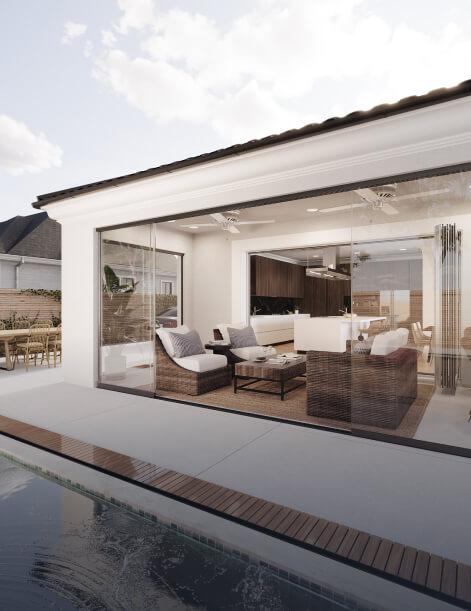
Frameless glass systems reinforce minimalism by removing the visible frame entirely. The result is a glass wall that reads as a plane of transparency rather than a structural element. Combined with flush-mounted hardware and continuous glass panels, frameless systems are the most visually quiet partition option available — and among the most popular for executive suites and design studios.
7Express Brand Identity Through Design
The physical office communicates brand values before a word is spoken. Color palettes, material choices, artwork, and signage all signal what the organization cares about. Modern office design uses these elements intentionally rather than leaving them to default finishes.
Frosted and printed glass partitions offer a way to incorporate brand graphics, patterns, or typography directly into the architecture of the space. Crystalia Glass can fabricate frosted or digitally printed glass panels to specification — a detail that adds identity without requiring a separate signage installation.
8Integrate Technology Seamlessly
Modern offices run on technology, but the physical infrastructure that supports it — cables, screens, charging stations, speakers — often creates visual clutter that undermines the design intent. Good modern office design plans for technology at the layout stage, not as an afterthought.
This means in-floor and in-wall cable routing, integrated power at worksurfaces, wall-mounted screens on glass or solid partitions, and wireless charging zones at collaboration tables. Writable glass surfaces — glass panels treated with a dry-erase coating — also serve a dual function as tech-adjacent collaboration tools.
9Separate Collaboration Zones from Focus Areas
Not all work happens the same way. A modern office design acknowledges this by creating distinct zones: open collaborative areas with writable surfaces and flexible seating, and quieter focus zones with acoustic separation and private workstations or enclosed booths.
Glass partitions are the most effective way to create this separation without permanently dividing the floor. A bank of low glass panels defines a focus zone visually; a fully glazed enclosure creates a quiet room without walls that feel isolating. Both can be reconfigured as team structures change — which, in most growing companies, they will.
10Design Hospitality-Inspired Common Areas
The reception area, kitchen, and common lounge are often afterthoughts in commercial office design — furnished with leftover budget and outdated stock. Modern office design treats these spaces as first impressions and daily resets: worth investing in, and worth designing with the same intention as the work areas.
Glass walls in reception areas create an arrival sequence that communicates openness and confidence. Open-plan café-style kitchens with lounge seating adjacent to glass-fronted meeting rooms mirror the hospitality environments that have influenced workplace design since the mid-2010s — and continue to define what a destination office feels like in 2026.
How Glass Partitions Serve Every One of These Ideas
Across all ten ideas above, one material keeps appearing: glass. That's not accidental. Glass office partitions are the design tool that makes open-plan flexibility and visual privacy coexist. They extend daylight, define zones, support acoustics, communicate brand, integrate with technology, and adapt as needs change — without the permanence and cost of drywall construction.
Crystalia Glass designs and fabricates custom glass partition systems for commercial offices in all 48 continental US states. Each system is custom-built to your dimensions at Crystalia's Brooklyn facility in four framing configurations — custom steel, aluminum CGF series, Kompas, and frameless — and installed by Crystalia's own factory-trained crews. Glass options include clear, low-iron, frosted, reeded, and acoustic laminated.
If you're planning an office redesign and want to know which configuration fits your space and budget, Crystalia offers a free design consultation. Bring your floor plan and design intent — the team handles the rest.